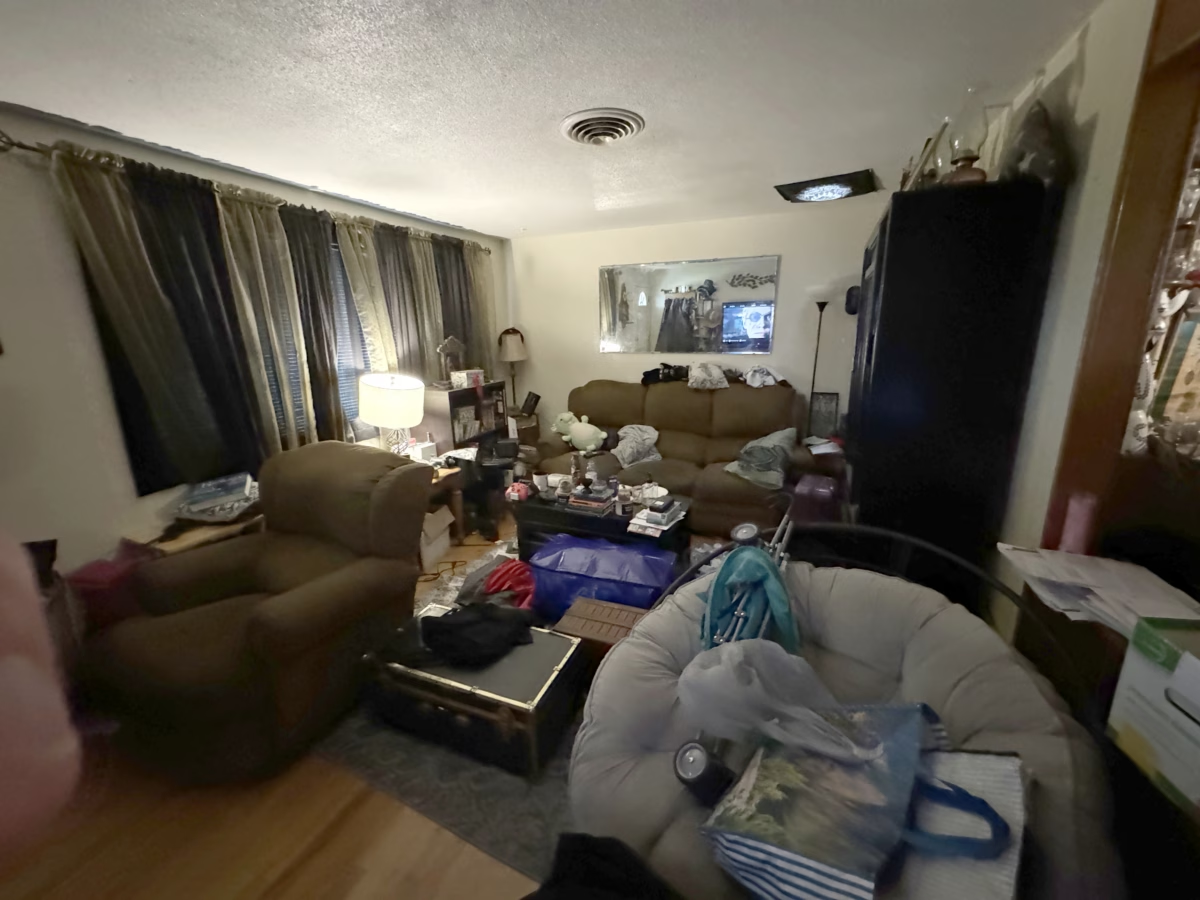
What to Do With a House After a Parent Dies in Colorado

Losing a parent is one of life’s most difficult experiences. Along with the emotional weight, many families are left wondering what to do with their loved one’s home. It can feel overwhelming to balance grief with practical responsibilities—but having a clear plan can make this process more manageable.

If you’re facing this situation in Colorado, you’re not alone. Here’s how to move forward step by step.

Before making any major decisions, it’s important to understand how probate impacts the home.

In Colorado, most properties must go through probate before they can be sold or transferred to heirs. This process ensures that debts are resolved and ownership is legally passed on.

If a personal representative (executor) has been appointed, they are responsible for managing the property during this time. Acting too quickly—such as attempting to sell the home before proper authority—is a common mistake that can create legal complications.

Secure and Stabilize the Home

One of the most important early steps is protecting the property.

This includes:

  • Changing locks if necessary
  • Ensuring windows and entry points are secure
  • Keeping utilities on to prevent damage
  • Maintaining the yard or exterior

A vacant home can deteriorate quickly or attract unwanted attention. Taking simple steps early helps preserve both value and peace of mind.

Take Time Before Making Big Decisions

It’s completely normal to feel pressure to “figure everything out” right away—but in most cases, you don’t need to rush.

Give yourself and your family time to process what has happened before deciding whether to keep or sell the home. Emotional decisions made too quickly can sometimes lead to regret.

Decide Whether to Keep or Sell

This is often the most difficult and personal decision.

Some key factors to consider include:

  • Financial reality: Can the home be maintained long term?
  • Emotional attachment: Does someone want to keep it in the family?
  • Number of heirs: More people can mean more complexity
  • Property condition: Does it require repairs or updates?

In some cases, one heir may wish to keep the home and buy out the others. In others, selling and dividing proceeds may be the simplest and most equitable solution.

Communicate Openly With Family

When multiple heirs are involved, communication becomes critical.

Misunderstandings often arise when expectations aren’t clearly discussed early on. Having open, honest conversations about goals, timelines, and concerns can prevent conflict later.

If disagreements arise, bringing in a neutral third party—such as a real estate professional experienced in probate—can help ground decisions in facts rather than emotions.

Understand the True Cost of Holding the Property

Keeping a home is not just an emotional decision—it’s a financial one.

Ongoing costs may include:

  • Mortgage payments
  • Property taxes
  • Insurance (which may increase if vacant)
  • Utilities and maintenance
  • Repairs or updates

These expenses are typically paid by the estate, but they can reduce what heirs ultimately receive. Understanding this early helps guide better decisions.

Prepare the Home for Its Next Step

Whether you decide to keep or sell, the home may need some level of preparation.

This could involve:

  • Sorting and removing personal belongings
  • Cleaning or deep cleaning
  • Addressing deferred maintenance
  • Deciding whether to make repairs or sell as-is

Every situation is different. Some homes benefit from light updates, while others are best sold in their current condition.

Explore Your Selling Options

If selling is the right path, you have more flexibility than you might think.

Options can include:

  • Selling the home as-is for convenience
  • Making minor improvements to increase value
  • Timing the sale based on market conditions
  • Coordinating the sale with the probate timeline

Working with a professional who understands probate sales in Colorado can help you navigate these choices while staying compliant with legal requirements.


Navigating what to do with a parent’s home can feel overwhelming, but you don’t have to go through it alone. With the right information, support, and a step-by-step approach, you can make thoughtful decisions that honor your loved one while protecting your family’s best interests.

Contact Colorado Estate Services today with any questions you may related to this stressful process.

Steps to Protect Property After a Death in Colorado

Losing a loved one is overwhelming, and handling their home can feel like an added burden during an already difficult time. In Colorado, there are important steps that should be taken immediately after a death to protect estate property and avoid costly issues later in the probate process.

Understanding what to do early can help preserve the home’s value, prevent legal complications, and give you peace of mind.

1. Secure the Property Immediately

One of the first priorities is making sure the home is safe. Change the locks if necessary, especially if multiple people had access. Remove spare keys and secure garages, sheds, and other entry points.

Vacant homes are more vulnerable to break-ins and vandalism, so taking this step early is critical.

2. Notify the Insurance Company

Many homeowners don’t realize that a standard policy may not fully cover a vacant property. Contact the insurance provider right away to inform them of the death and vacancy status.

You may need a vacancy endorsement or a new policy to ensure proper coverage.

3. Maintain Utilities and Basic Upkeep

It can be tempting to shut everything off, but maintaining basic utilities is essential. Keep electricity, water, and gas running to prevent issues like mold, frozen pipes, or deterioration.

Regular maintenance such as lawn care or snow removal also helps avoid city violations and keeps the property presentable.

4. Forward Mail and Monitor Bills

Forwarding mail ensures you don’t miss important notices such as mortgage statements, tax bills, or insurance documents.

Staying on top of these obligations helps prevent penalties, lapses in coverage, or legal complications during probate.

5. Document the Property Condition

Take photos or videos of the home and its contents as soon as possible. This documentation can be helpful for insurance purposes, estate accounting, and avoiding disputes among heirs.

6. Limit Access to Authorized Individuals

Only allow access to those directly involved in the estate. This reduces the risk of missing items, misunderstandings, or liability issues.

7. Consult Probate and Real Estate Professionals

Every estate is different, and Colorado probate laws can impact what you can and cannot do with the property. Working with professionals ensures you stay compliant while making informed decisions.


Taking these steps early can prevent unnecessary stress, protect the estate’s value, and make the probate process smoother for everyone involved. If you’re unsure where to start, guidance from experienced professionals can make all the difference.

Contact Colorado Estate Services today to for assistance on protecting one of the estates largest assets.

What Is an MDPOA and Why Every Family Needs One

When a loved one begins to age or faces a serious health diagnosis, one of the most important legal decisions a family can make is establishing a Medical Durable Power of Attorney (MDPOA). This vital document allows someone to legally make healthcare decisions on anothers behalf if they become unable to speak for themselves.

But even with paperwork in place, navigating real-life medical crises and end-of-life care decisions can be overwhelming. That’s where professionals like Debra Kooser at NorthStar Elder Solutions step in, not just to help with documents, but to guide families with compassion, clarity, and years of hands-on experience.

What Is a Medical Durable Power of Attorney?

A Medical Durable Power of Attorney gives a trusted individual the legal authority to make medical decisions for someone else (the principal) when that person is incapacitated or unable to communicate. This can include decisions about treatments, procedures, nursing care, hospice, and even life support. It is durable because it remains in effect even after the principal loses capacity.

Unlike a living will, which outlines preferences but doesn’t assign a decision-maker, an MDPOA ensures there’s a real person, often a family member or professional advocate, ready and able to step in when critical healthcare choices arise.

How Debra at NorthStar Elder Solutions Supports Families

Debra, the founder of NorthStar Elder Solutions, has served as a Medical Durable Power of Attorney for multiple clients and brings deep experience in navigating the complex realities of elder care.

Whether she appointed as an MDPOA or working behind the scenes to support someone who has been, Debra role often includes:

  • Helping families understand what care options are available
  • Coordinating with doctors, hospitals, and long-term care providers
  • Advocating for her clients medical preferences
  • Preventing unnecessary hospitalizations or overly aggressive treatments
  • Acting as a calm, informed voice when emotions are running high

Debra’s approach is grounded in years of experience working with aging individuals and their loved ones, and her clients consistently describe her as steady, reliable, and deeply compassionate. For families facing overwhelming choices, she becomes a guide, advocate, and trusted presence.

When to Reach Out

If you’re caring for an aging parent, helping a loved one plan ahead, or managing a complex medical or estate situation, having an experienced MDPOA or someone who can coach you through the process is invaluable.

Debra Levy at NorthStar Elder Solutions is an exceptional resource for:

  • Serving as a neutral MDPOA when no family is available or appropriate
  • Supporting individuals who have been named MDPOA but feel unsure of what to expect
  • Navigating transitions to assisted living, hospice, or in-home care
  • Acting as a liaison between healthcare providers and families

A Trusted Partner in Difficult Times

At Colorado Estate Services, we often see how interconnected legal, medical, and real estate decisions become when a family member ages, falls ill, or passes away. We’re proud to work alongside partners like Debra who understand the human side of this process and who step in with integrity when families need help the most.

You can learn more about Debra’s services at www.northstareldersolutions.com

And as always, if you or your clients need help with estate-related real estate, we’re here to guide the process every step of the way.

How to Protect Loved Ones From Estate-Related Scams

We live in a hyper-connected digital world and it’s no secret that our information is bought and sold by scammers, no matter how cautious we are. The good news is, understanding and preparing for these scams can help you protect yourself and loved ones even if the scammer has some of your information already.

Scams that target the elderly and families in the estate settlement process continue to soar: according to the FBI’s Internet Crime Complaint Center (IC3), Americans aged 60 and older lost more than $3.4 billion to fraud in 2023 alone, with this trend continuing upward in 2025.

We’ve identified the top five scams targeting older adults and families in the estate settlement process this year and have practical steps you or your loved ones can take to stay safe.

The best preventative measure is always consistent communication with trusted family members or friends. If you’re ever unsure that you might be target for a scam, talk to someone so they can help.

  1. Tech Support Impostor Scams

    One of the most prevalent scams in 2025 involves fraudsters impersonating tech support representatives from well-known companies like Microsoft or Apple. They reach out via phone calls, pop-up warnings, or emails, claiming that a device has been compromised by a virus or that there’s an urgent software issue.

    If you receive one of these messages or warnings, it is most likely a scam.

    How to Protect Yourself:
    – Hang up on unsolicited calls from tech support agents.
    – Change your password or passcode for your Apple, Microsoft, or other accounts immediately to ensure that the current password wasn’t compromised.
    – Contact Apple, Microsoft or other account support and inform them of the potential scam. They will be able to check to see if there is truly an issue with your account and advise you of next steps.
    – Never give remote access to your computer unless you initiated the support call with a verified source.
    – Never click on a pop-up warning. Legitimate companies do not use aggressive messaging to solicit support services.
    – Talk to a trusted friend or family member before making payments or clicking links.

  2. Investment and Cryptocurrency Scams

    Investment scams, particularly those involving cryptocurrency like Bitcoin are on the rise and targeting elderly individuals through fake advisors, fraudulent trading platforms, or even romantic partners. In 2023, seniors lost more than $1.2 billion to such scams, a major increase from just two years prior. Fraudsters may take time to build trust by messaging you on social media like Facebook, Instagram, or even via email to prove they are a real person.

    How to Protect Yourself:
    – If the fraudster is claiming to be an investment advisor, ask them for their full name, business name, email address, and FINRA broker credentials. Then research the firm – never click on any links they send you.
    – Avoid investment offers that promise guaranteed or outsized returns.
    – Verify credentials of any advisor or platform through FINRAs BrokerCheck.
    – Don’t mix love and money – romance scammers often merge emotional manipulation with financial fraud.
    – Use only regulated financial services and platforms. Never agree to transfer financial information or cryptocurrency directly to anyone.

  3. Romance & Grandparent Scams

    Romance scammers often establish long-distance online relationships, slowly gaining trust before requesting money for emergencies, travel, or investments. Meanwhile, grandparent scams have taken a frightening turn with the advent of AI-generated voice technology. In 2025, criminals can now mimic a grandchild’s voice, calling to claim they’ve been in an accident or arrested, pleading for immediate financial help. The voice on the phone call can be indistinguishable from a family members voice. Romance scammers can even attempt to connect with families that have just lost their loved one, claiming they were a partner of the deceased.

    How to Protect Yourself:
    – Never send money to someone you’ve never met in person.
    – Ask detailed questions if you receive an urgent call from a family member and verify their identity.
    – Create a family safe word – a system to confirm identities in emergencies.
    – Be suspicious of emotional manipulation, especially when paired with requests for gift cards, money transfers, or sending financial information
    – Consult a trusted friend or family member before making emotional decisions involving money.

  4. Government Impersonation & Social Security Scams

    Posing as officials from the IRS or Social Security Administration, scammers use fear and intimidation to extract personal and financial information from elderly victims. They may claim the victim owes back taxes, their Social Security number has been compromised, or that their benefits will be suspended.

    How to Protect Yourself:
    – Never answer calls from unknown numbers. Let it ring to voicemail and listen to the message. Answering the phone can signal to scammers that the phone number is active, encouraging more scams.
    – Know that the IRS and SSA will never call you to demand payment.
    – Never provide personal or financial info to unsolicited callers.
    – Beware of pressure tactics, such as threats or promises of increased benefits.
    – Verify official correspondence by contacting government agencies directly through official websites.

  5. Debt Fraud

    Debt fraudsters can target both elderly individuals and families navigating the estate settlement process. This scam involves contacting an individual claiming a debt is owed and demanding payment, often threatening fees or additional penalties. This type of scam can be difficult for families who’ve recently lost a loved one and published a public notice to creditors.

    How to Protect Yourself:
    – Coordinate with family to agree on a mailing address where creditor claims can be sent to.
    – If a creditor notice has been published in a newspaper, inform the potential creditor which newspaper. The creditor can look up and follow the instructions posted.
    – NEVER agree to a debt claim from a phone call. Always require proof of valid debts be sent to the mailing address you’ve determined.
    – Never verify personal details of yourself or the deceased, such as name, SSN, DOB, etc. If a debt is valid, the creditor will have all of the required information and you can just advise them to send information to the mailing address for further review.


Last Thoughts

1. Communicate and Collaborate with Family Members: Document your debts, assets, and other general information using a platform like One Step After to track which creditors, government agencies, or other communication might be valid.

2. Talk Regularly: Maintain open lines of communication with family and friends. Isolation increases vulnerability.

3. Report Suspicious Activity: File reports with the FTC, local police, and IC3.gov if you suspect a scam.

4. Don’t answer the phone for unknown numbers: Let unknown phone numbers go to voicemail and suspicious texts. You can verify the caller and call them back if the call was real.

5. Designate a Financial Advocate: Choose a trusted person to help manage or review financial transactions.

About the author: Chris is the Founder of One Step After, an online estate organization software for seniors planning their estate and for families navigating the after-loss process. One Step After empowers families to collaborate on estate details to make estate organization easy and cost effective.

If you have any additional questions please contact us at Colorado Estate Services.

Low-Cost Renovations That Add Value to Inherited Homes

When it’s time to sell an estate property, the question of whether to update or renovate often comes up early in the conversation. The good news? A full remodel is rarely necessary. In many cases, small, thoughtful improvements can help the home sell faster and for a higher price without overextending the estate’s time, budget, or resources.

Whether you’re a personal representative, attorney, or family member navigating the process, focusing on simple, cost-conscious upgrades can deliver excellent returns and reduce friction during the sale.

Here are five smart improvements that offer strong value without requiring a major investment.

1. Fresh Paint Inside and Out

Painting is one of the most affordable and high-impact updates you can make. A fresh coat of neutral-colored paint helps a home look brighter, cleaner, and more inviting. Stick with light gray, beige, or soft white to appeal to a wide buyer pool.

Exterior paint, especially on doors, trim, and shutters, can dramatically improve curb appeal. It also helps online listing photos stand out, encouraging more showings and stronger first impressions.

2. Updated Lighting Fixtures

Outdated lighting can make a home feel dark or dated, even if the rest of the property is well-maintained. Replacing older fixtures with clean, modern alternatives helps rooms feel brighter and more contemporary.

LED bulbs and simple lighting upgrades are inexpensive and easy to install. They instantly signal that the home has been cared for, and they can improve overall presentation with minimal effort.

3. Front Yard and Curb Appeal Refresh

Most buyers form an impression of a home before they even walk through the front door. That’s why minor landscaping updates and exterior clean-up are essential.

Key areas to focus on include:

  • Trimming overgrown shrubs
  • Pulling weeds and laying fresh mulch
  • Planting seasonal flowers or low-maintenance greenery
  • Pressure washing driveways, walkways, and siding

These updates help the home appear well-maintained and move-in ready, qualities that buyers prioritize.

4. Kitchen and Bathroom Mini-Upgrades

You don’t have to gut the kitchen or install all-new cabinetry to make a meaningful impact. Instead, focus on targeted updates that modernize the space and enhance appeal:

  • Replace cabinet hardware
  • Swap out outdated light fixtures or faucets
  • Resurface counters or reglaze bathtubs
  • Regrout tile to freshen up older surfaces

These small changes can make a dated kitchen or bathroom feel significantly more updated and livable often for under $1,000.

5. Flooring Repairs and Touch-Ups

Worn flooring is one of the first things buyers notice—and it can be a deal-breaker. Fortunately, full replacement isn’t always necessary. Options include:

  • Replacing carpet in key areas
  • Refinishing scratched hardwood
  • Professionally cleaning existing floors

Even partial upgrades can dramatically improve a home’s visual appeal and help eliminate buyer objections.

Maximize Return with the Right Improvements

Every dollar spent preparing an estate property should ideally yield a multiple of that amount in increased sale value or reduced time on market. Strategic updates help ensure the home appeals to more buyers, appraises well, and sells with less negotiation and fewer delays. For more insight on improvements that add value, This Old House shares tips on top home upgrades by return on investment.

At Colorado Estate Services, we walk properties with our clients to identify the most impactful improvements and connect you with trusted vendors who can execute the work quickly and affordably.

If you’re unsure which updates make sense for a particular home, contact us for a free consultation and customized recommendations.

What To Do Right After a Loved One Passes Away

Losing a loved one is never easy. While you are grieving, there are also many practical steps that need to be taken, often sooner than you expect. If you are feeling overwhelmed or unsure of where to start, this guide will help you understand what to do in the first hours, days, and weeks following a death.

Immediate Tasks

In the very beginning, focus on the most time-sensitive matters:

  • Notify close family and friends so they can begin to support you and each other
  • Arrange care for pets or dependents to ensure their immediate well-being
  • Secure the home and valuables, especially if the property will be vacant
  • Choose a funeral home or provider to begin making arrangements
  • Remove perishable items from the home if it will be unoccupied
  • Notify the employer of the deceased
  • Contact trusted professionals such as an estate attorney, financial advisor, CPA, or realtor

Planning the Memorial

Honoring your loved one’s life may include:

  • Choosing the type of memorial or funeral service
  • Selecting a venue, setting a date and time
  • Deciding who will speak or participate in the service
  • Creating an invitation list and ordering printed programs
  • Gathering photos or videos for a media tribute
  • Arranging food, drink, flowers, or decorations
  • Offering guests guidance on where to send gifts or donations
  • Choosing the final resting place such as burial or cremation

Next Steps to Handle Early

Once immediate tasks are handled:

  • Write and submit an obituary
  • Notify the broader community
  • Request 5 to 10 original death certificates for legal and financial purposes
  • Locate important documents such as the will, insurance policies, social security card, driver’s license, and account statements

Securing Vacant Property

If the deceased lived alone or the home will be unoccupied:

  • Lock all doors and windows
  • Notify local police or authorities to request extra patrols
  • Place No Trespassing signage
  • Winterize the home by shutting off water, draining lines, and maintaining heat

Managing Financial Matters

Begin by contacting:

  • Life insurance companies to start claim processes
  • The Social Security Office to report the death and ask about survivor benefits
  • The Veterans Affairs office if your loved one served in the military
  • The deceased’s employer to inquire about benefits
  • Utility services to transfer or cancel accounts

You Do Not Have to Do This Alone

This list is just the beginning. Every estate is different, and unexpected details may come up. If you are looking for help connecting with reliable professionals such as probate attorneys, estate sale companies, or financial advisors, or if you want one on one support, consider reaching out to us at Colorado Estate Services or Kylee at After Loss Advisors.

No one should have to navigate this time alone. We are here to help you move forward with compassion, clarity, and trusted resources.

You can click below to download a printable version of this checklist and keep it on hand as you take the next steps.

Loading Viewer…

Maintenance Mistakes That Can Delay or Derail an Estate Sale

Inherited homes and long-vacant properties often come with small, overlooked repair issues. At first glance, these may seem minor or purely cosmetic. But for personal representatives, attorneys, and fiduciaries managing an estate, these small problems can lead to serious financial consequences if left unaddressed.

At Colorado Estate Services, we help families and estate professionals avoid costly surprises by identifying and managing deferred maintenance early, before it impacts the home’s value, marketability, or safety.

The Hidden Cost of ‘Waiting Until Later’

It’s common to assume that an older or unused property is fine for now, especially when no one is living in it. But time, weather, and neglect often cause small issues to escalate into expensive, disruptive repairs. Below are several real-world examples of how deferred maintenance can quietly drain equity from an estate:

  • A minor roof leak that could have been patched for a few hundred dollars turns into mold remediation and drywall replacement, which can easily exceed $7,000 – $10,000 not to mention the disruption to potential buyers and delays in closing.
  • Clogged gutters don’t just look messy, they can cause water to pool around the foundation. Over time, this can lead to structural cracks, basement flooding, or erosion around the home. These repairs often cost $5,000+ depending on severity and insurance coverage.
  • An aging water heater may appear to function fine, but if left unchecked, it could rust through and burst. The resulting water damage can destroy flooring, walls, and even cabinetry. Replacing the unit costs less than $2,000. Repairing the damage it causes might be five times that.
  • Overgrown trees and landscaping aren’t just an eyesore. They create an impression of abandonment that can deter buyers or, worse, invite break-ins or squatters. Rodents and insects are also more likely to settle in when a home appears neglected. Clean-up and pest control can quickly become another unexpected line item.
  • HVAC systems that sit idle may develop issues from lack of use such as seized motors, clogged condensate lines, or failed thermostats. Regular tune-ups and filter changes are far more cost-effective than a full system replacement, which can run $8,000- $15,000 depending on the home.

Why It Matters at Sale Time

Deferred maintenance doesn’t just affect a home’s physical condition, it directly impacts its market appeal and final sale price. A home that appears neglected:

  • Attracts fewer retail buyers and more bargain-seeking investors
  • Sits on the market longer, increasing holding costs
  • Results in lower offers and more complex negotiations

Even simple updates like fresh paint, deep cleaning, basic landscaping can increase perceived value by 10% or more. But if core maintenance issues are ignored, cosmetic upgrades won’t be enough to reassure today’s buyers.

For estate representatives, staying ahead of basic maintenance is one of the most effective ways to protect the value of the property and ensure a smoother sales process.

We Can Help You Prioritize What Matters

You don’t need to tackle everything at once or alone. At Colorado Estate Services, we regularly assist families and fiduciaries with:

  • Property inspections and repair coordination
  • Prioritizing quick, high-impact fixes
  • Referrals to trusted contractors who understand estate needs

Whether you’re listing a home in its current condition or preparing it for retail buyers, we’re here to help you reduce risk, avoid delays, and preserve the estate’s equity.

Contact Colorado Estate Services today to schedule a free consultation or learn more about how we can help.

How to Talk to Family About Selling an Inherited Home

For many families, the home left behind by a loved one is more than just real estate, it’s a place filled with memories, meaning, and emotional ties. Deciding whether to keep or sell the property can be one of the most emotionally charged parts of the probate process, especially when multiple heirs are involved.

At Colorado Estate Services, we’ve guided hundreds of families through this sensitive transition. Below are practical tips for approaching the conversation with empathy, clarity, and shared purpose.

1. Acknowledge the Emotional Weight

Before diving into financials or logistics, it’s important to recognize that emotions will naturally play a role in the decision. The home may represent:

  • A lasting connection to the loved one who passed
  • Childhood memories shared among siblings
  • A place of stability during uncertain times

Starting the discussion by acknowledging these emotions helps set a respectful tone. Let family members know that their feelings are valid, and that the goal is to make a thoughtful, compassionate decision together.

In Colorado, the Personal Representative (PR) is the individual legally responsible for managing the estate, including decisions related to real estate. While the PR has the final authority, maintaining open communication with siblings and other heirs can prevent misunderstandings and conflict.

Set clear expectations from the beginning:

  • What decisions require consensus?
  • What decisions are solely the PR’s responsibility?
  • What is the timeline for making key decisions?

Even when there’s legal clarity, emotional transparency can go a long way in preserving family relationships.

For more details about a Personal Representative’s legal responsibilities, the American Bar Association offers a helpful overview.

3. Gather Objective Information First

Before any decisions are made, it’s helpful to collect facts that can ground the conversation in reality:

  • What is the property worth in its current condition?
  • Are there ongoing costs associated with keeping it (mortgage, taxes, maintenance)?
  • Would any upgrades or repairs increase its market value?

At Colorado Estate Services, we offer free property assessments and date-of-death appraisals to help families make decisions based on current market data, not assumptions.

4. Explore Each Person’s Interest in the Property

Once everyone has access to the same information, ask key questions to understand individual perspectives:

  • Does anyone want to live in or keep the home?
  • Is a buyout feasible for the person who wants to keep it?
  • Would keeping the home create a financial burden for others?

In many cases, families start with the intention to keep the home, but realize that selling it may better serve everyone involved. A neutral third party, such as a real estate professional experienced in probate, can help mediate these conversations objectively.

5. Focus on Shared Goals

Reframing the conversation around shared goals can reduce tension and build unity. Instead of focusing on individual preferences, ask:

  • What would our loved one have wanted?
  • How can we minimize conflict and stress?
  • What outcome is in the best interest of the estate and all heirs?

Common goals such as maximizing value, preserving family harmony, and honoring the memory of the deceased can guide families toward a fair and peaceful resolution.

6. Let Colorado Estate Services Help

Selling or keeping a family home is rarely just a financial decision, it’s a deeply personal one. That’s why we offer more than just listing services. At Colorado Estate Services, we provide:

  • Free property evaluations and appraisals
  • Guidance for families navigating emotional and logistical challenges
  • Access to trusted legal and financial professionals
  • Full support whether you choose to sell, hold, or explore other options

If your family is facing uncertainty about what to do next, we’re here to help you move forward with confidence, compassion, and clarity.

Contact Colorado Estate Services today for a no-obligation consultation.

How to Spot Signs of Property Deterioration Early

A home that looks perfectly fine on the surface can hide serious issues that lead to expensive repairs down the line. For attorneys managing estate or trust properties, catching early signs of deterioration is critical for preserving a home’s value and ensuring a smoother sale or transfer.

Here are the most common early warning signs to watch for and what they might mean:

1. Water Stains or Peeling Paint

These are often the first red flags for hidden leaks. Whether it’s a minor roof leak, a burst pipe, or a slow plumbing drip, moisture intrusion is one of the most damaging and costly issues a property can face. If left untreated, it can lead to mold growth, wood rot, and compromised structural integrity. Always inspect ceilings, around windows, and under sinks.

2. Musty Smells or High Humidity

A persistent musty odor or noticeable dampness is often a sign of poor ventilation or hidden water problems. Basements and crawlspaces are particularly vulnerable, especially in older homes. Check for condensation on pipes or walls, warped wood, or damp carpeting all of which can signal a moisture problem that needs attention.

3. Signs of Pest Activity

Uninvited guests like rodents, termites, or carpenter ants can quietly wreak havoc. Look for droppings, gnawed materials, or hollow-sounding wood. Chewed electrical wires can also create fire hazards. Catching an infestation early is key to avoiding serious structural damage and high extermination costs.

4. Cracks in Walls, Ceilings, or the Foundation

Some minor settling is normal over time, but larger or expanding cracks can point to serious foundation or structural issues. Pay attention to cracks wider than 1/8 inch, especially if they’re accompanied by sloping floors, sticking doors, or gaps around windows.

5. Unexplained Spikes in Utility Bills

If a vacant or lightly used property suddenly has a jump in water or electricity usage, it could be a sign of trouble. Leaking toilets, damaged irrigation systems, or failing HVAC equipment are common culprits. Monitoring utility bills from companies such as Denver Water can offer a simple early warning system.

6. Exterior Wear and Neglect

Flaking paint, clogged gutters, missing shingles, or overgrown landscaping might seem cosmetic, but they can also expose the property to moisture damage or pest entry points. Routine exterior upkeep helps preserve curb appeal and structural protection.

Small problems can quickly snowball into major repairs when homes are left unmonitored. Regular inspections, especially in inherited or vacant properties, are essential for protecting the asset. Partnering with a real estate team that specializes in estate and probate properties ensures issues are caught early and handled efficiently.

Have questions or need help evaluating a property? Feel free to reach out to Colorado Estate Services, we’re here to assist.

Local Burial Assistance Programs for Families in Need

At Colorado Estate Services, we recently had the privilege of meeting, Kimberly Rosene, a Hospice Specialist, at AdventHealth Porter Hospice. Kimberly’s dedication to supporting families during end-of-life transitions is truly inspiring. She shared invaluable information about local resources available to assist families with funeral and burial expenses.

AdventHealth Porter Hospice, located in Denver, offers compassionate, whole-person care to patients and their families. Their team provides not only medical support but also emotional and spiritual guidance, ensuring that each individual’s journey is met with dignity and respect. Kimberly and her colleagues work tirelessly to connect families with the resources they need during these challenging times.

One critical aspect Kimberly highlighted is the availability of county-level assistance programs designed to help low-income families cover funeral and burial costs. Here’s an overview of the resources available in the five-county Denver metro area:


Denver County

  • Program: Burial Assistance Program
  • Benefit: Up to $1,500 toward funeral, burial, or cremation costs; total expenses must not exceed $2,500.
  • Eligibility: Based on the deceased’s eligibility and available resources.
  • ApplicationDenver Burial Assistance

Arapahoe County

  • Program: Burial Assistance via Department of Human Services
  • Benefit: Financial assistance for funeral, burial, or cremation costs.
  • Eligibility: For individuals whose estates are insufficient.
  • ApplicationArapahoe County Burial Assistance

Jefferson County

  • Program: Burial Assistance Program
  • Benefit: Financial assistance for funeral, burial, or cremation costs.
  • Eligibility: Low-income residents with limited resources.
  • ApplicationJefferson County Burial Assistance

Adams County

  • Program: Burial Assistance Program
  • Benefit: Public assistance grant for burial, funeral, and cremation services.
  • Eligibility: Recipients of most financial and medical assistance programs; income and resource guidelines apply.
  • Application:  burial@adcogov.org for initial screening and application process.

Douglas County

  • Program: Burial Assistance Program
  • Benefit: Up to $1,500 toward burial or cremation services; total costs must not exceed $2,500.
  • Eligibility: Low-income individuals or those receiving financial assistance or Medicaid.
  • ApplicationDouglas County Burial Assistance

For veterans, the U.S. Department of Veterans Affairs offers burial allowances and other benefits. More information can be found at VA Burial Benefits.

For more information on AdventHealth Porter Hospice and the compassionate care they provide, please visit their official website or reach out to Kimberly at (303) 694-3545.

If you or someone you know needs assistance navigating these resources, please don’t hesitate to reach out to us at Colorado Estate Services. We’re here to support you every step of the way.

How to Save on Taxes When Selling an Inherited Home

If you’ve inherited a property in Colorado, you may be surprised to learn that selling it could trigger capital gains tax. Fortunately, the IRS offers favorable treatment for inherited real estate that can significantly reduce, or even eliminate your tax liability if you have the right documentation.

At Colorado Estate Services, we guide families through the process of preparing and selling inherited homes, and we work with trusted professionals to help you make smart financial decisions.

What Is Capital Gains Tax?

Capital gains tax is a tax on the profit you make when selling a capital asset, such as a home. For most real estate, the gain is calculated by subtracting the original purchase price from the sale price.

Standard formula:
Sale Price – Purchase Price = Capital Gain

But for inherited homes, the IRS applies a different and more beneficial calculation.

How a Step-Up in Basis Works

When you inherit a home, you’re not taxed based on the original owners purchase price. Instead, you receive a step-up in basis, which adjusts the property’s value to its fair market value (FMV) on the date of the decedents death. For additional guidance, the IRS explains how basis is calculated for inherited property in Topic No. 703.

Example:

  • A home was purchased in 1980 for $75,000
  • The owner passes away in 2024; the home is valued at $450,000
  • You sell it for $455,000 later that year

Your taxable gain is only $5,000, not $380,000, because of the step-up in basis.

This benefit can greatly reduce or eliminate capital gains tax, but it requires proper documentation.

Why You Need a Date-of-Death Appraisal

To use the step-up in basis, the IRS may require proof of the property’s fair market value on the date of death. That’s where a date-of-death appraisal comes in.

At Colorado Estate Services, we offer a complimentary date-of-death appraisal (up to $650) for families who choose to list their inherited home with us. This independent valuation can:

  • Provide essential documentation for your CPA
  • Support your basis in case of an IRS audit
  • Serve as a financial planning tool before listing the home

A formal appraisal creates a clear, defensible record of the home’s value, whether you sell the home now or years later.

Why Timing Still Matters

Even if you’re not planning to sell the home right away, it’s important to get a date-of-death appraisal as soon as possible. Property values may rise or fall over time, but the IRS will still expect documentation of the home’s value at the time of death.

Without an appraisal:

  • You may overpay taxes by underestimating your stepped-up basis
  • You risk delays or issues when filing your taxes
  • Your CPA may lack the information needed to calculate capital gains accurately

How We Can Help

At Colorado Estate Services, we help families navigate the sale of inherited property with clarity and care. Our team can coordinate the valuation, prep, and sale of the home, whether you’re local or managing the estate from out of state.

We’re not tax advisors, but we work closely with experienced CPAs and probate attorneys who can provide legal and financial guidance. We’ll also provide the tools you need, including a complimentary date-of-death appraisal, to make smart and informed decisions.

If you’ve inherited a home and are unsure how capital gains tax may apply, contact Colorado Estate Services. We’ll help you move forward with confidence.

Attorney or Agent? How to Navigate Real Estate in Probate

If you’re managing an estate in Colorado, you’re likely juggling a long list of responsibilities and facing some unfamiliar territory. One of the biggest questions we hear is: Do I call a probate attorney first, or a real estate agent?

The answer depends on where you are in the process, but knowing the difference between the two roles can save you time, money, and unnecessary stress.

At Colorado Estate Services, we work closely with both families and attorneys to keep the real estate side of probate smooth, respectful, and efficient. Here’s a breakdown to help you know who to call, and when.

When to Call a Probate Attorney

Your first step after a loved one passes, especially when real estate or other significant assets are involved, is to consult a probate attorney. Their role is to guide you through the legal process of settling the estate.

A probate attorney can help you with:

  • Filing the will and initiating probate with the court
  • Appointing a Personal Representative (PR)
  • Notifying creditors and managing claims
  • Interpreting legal documents, timelines, and court requirements
  • Resolving disputes among heirs or beneficiaries
  • Ensuring compliance with Colorado probate law

Even with a ‘simple estate’, an attorney can help avoid costly delays or legal issues.
You can also find helpful resources and probate forms directly on the Colorado Judicial Branch’s probate page.

Note: Colorado Estate Services does not provide legal advice, but we’re happy to refer trusted probate attorneys we work with regularly.

When to Call a Probate Real Estate Agent

Once a Personal Representative has been officially appointed and there’s real property to sell, it’s time to bring in a probate-savvy real estate agent.

At Colorado Estate Services, we specialize in guiding estate sales from start to finish, and we can assist with:

  • Providing property valuations (retail market vs. quick-sale options)
  • Coordinating clean-outs, repairs, and landscaping
  • Staging and listing the home for maximum exposure
  • Handling vacant property security and maintenance
  • Supporting out-of-state heirs or PRs with remote closings
  • Navigating potential title issues related to estates or heirs

While a real estate agent can’t give legal advice, they can make the sale process smoother, more profitable, and less overwhelming.

How Attorneys and Real Estate Agents Work Together

The best outcomes happen when attorneys and agents collaborate effectively. At CES, we frequently work alongside probate attorneys to ensure the estates real property is handled with care, professionalism, and attention to timelines.

Together, we help clients:

  • Sell properties efficiently and legally
  • Maximize returns for heirs and beneficiaries
  • Navigate complex property situations (tenants, liens, hoarding, etc.)
  • Keep everything documented and aligned with court requirements

We respect legal boundaries, communicate proactively, and help Personal Representatives feel confident and supported.

Not Sure Where to Start?

Whether you’re in the early stages of probate or ready to prepare the property for sale, we’re here to guide you.

Contact Colorado Estate Services for a free consultation. We’ll help you connect with the right professionals and walk you through what comes next.

How to Navigate an Estate Property Cleanout Without the Overwhelm

One of the most emotionally and logistically difficult parts of settling an estate is cleaning out the property. Whether the home has been well-kept or left neglected, the process of sorting through a loved one’s belongings can be deeply overwhelming for heirs, especially when grief, time constraints, or family dynamics are involved.

For fiduciaries and estate attorneys, offering guidance on how to approach the cleanout process can help clients avoid delays, reduce conflict, and ultimately get the property ready for market more efficiently.

Here’s a step-by-step approach to simplify the process:

1. Assess Before You Act

Before diving in, walk through the property to get a full picture of what’s inside. Take note of any personal property, financial or legal documents, heirlooms, or items with sentimental value. Snapping photos of rooms or items can help with inventorying, sharing with heirs, or consulting with appraisers later. If the property is cluttered or unsafe, consider doing this walkthrough with a trusted professional or contractor.

2. Sort with a Plan

Creating structure helps cut through the emotional weight of decision-making. A four-category system works well:

  • Keep – Items with personal, legal, or significant monetary value.
  • Donate – Usable goods that others could benefit from.
  • Sell – Valuables or collectibles that may have resale value.
  • Discard – Broken, expired, or unsalvageable items.

Encourage family members to participate early, ideally in person or via video, to avoid confusion or disputes. If conflicts arise, consider bringing in a neutral third party such as a professional organizer or mediator.

3. Bring in Professionals

Time is often limited, especially when the property needs to be listed or returned to a trust. Hiring experienced help can speed things up and reduce stress.

  • Junk haulers can remove bulk trash, furniture, or old appliances in a single day.
  • Estate sale companies can organize and price sellable items, often taking a percentage of proceeds.
  • Organizers or move managers are great for helping seniors and families sort through generations of belongings.

These services are especially helpful when heirs are out of state or the home has been sitting for a long time.

4. Document What’s Removed

For fiduciaries and personal representatives, record-keeping is key. Maintain a log of valuable items distributed, items sold, and anything donated, along with receipts and photos where possible. This transparency protects everyone involved and can make estate accounting far smoother.

5. Leave the Home Market-Ready

Once the home is cleared, don’t stop there. A professional deep cleaning makes a big difference in how a home shows to buyers. Consider touch-up paint, minor repairs, or staging if appropriate. A clean, empty home helps buyers visualize potential, and allows for a faster, more confident sale.

Final Thoughts

A cluttered or neglected home can feel overwhelming, but with the right plan and partners, the cleanout process doesn’t have to be. For attorneys and families alike, simplifying this step not only eases stress but also preserves property value.

If you or your client is feeling stuck or unsure where to start, we’re happy to step in. We can manage the entire cleanout process from start to finish, so they don’t have to go it alone. Reach out to us anytime.

Renovate or Sell? How to Sell Inherited Homes the Smart Way

One of the most common questions we get at Colorado Estate Services is: “Should I fix up the home before selling, or just sell it as-is?” If you’ve inherited a property or are managing the sale of an estate, this is a key decision that can impact both your time and your bottom line.

Our answer? Don’t try to become a house flipper.

Why “Fix & Flip” Usually Doesn’t Work for Estates

TV shows and online videos make flipping a house look fast and easy. But real life tells a different story:

  • Most estates are managed by personal representatives with limited time, money, and emotional bandwidth.
  • Renovation costs add up fast and timelines often go longer than expected.
  • Hiring contractors, pulling permits, and navigating inspections can become a full-time job.

Unless you’re a licensed contractor or investor with deep experience, attempting a full renovation is rarely worth the risk.

Focus on Smart, Value-Boosting Fixes

Instead of a full remodel, we recommend focusing on cost-effective improvements that bring at least an equal or better return on investment. These are the “no regret” fixes that:

  • Improve first impressions
  • Make the home move-in ready
  • Avoid scaring off traditional buyers

Top Fixes Worth Doing Before You Sell:

  • Fresh interior paint in neutral colors
  • New carpet or professional carpet cleaning
  • Minor drywall repairs (patching holes, smoothing rough spots)
  • Deep cleaning of every room, especially kitchens and baths
  • Curb appeal upgrades like lawn care, fresh mulch, and trimmed shrubs
  • Replacing broken light fixtures or cabinet hardware
  • Decluttering and removing dated furniture or heavy decor

These upgrades are affordable, fast to complete, and help buyers see the home’s potential without overwhelming you.

When Selling As-Is Might Be the Best Option

There are times when selling the home completely as-is is the most sensible choice:

  • The home has major structural or system issues (roof, plumbing, electrical)
  • The estate doesn’t have funds to invest in repairs
  • You need to sell quickly due to time constraints, taxes, or legal pressures

In these cases, we can connect you with trusted off-market buyers and investors who specialize in as-is properties. We also offer quick sale pricing options to help you weigh your choices.

We Help You Decide What Makes Sense

At Colorado Estate Services, we don’t push you toward one path or another. We look at your situation, the property’s condition, and your goals to help you make a decision that protects your time, sanity, and bottom line.

Whether that means selling it as-is or making a few smart upgrades to boost your price on the MLS, we’re here to help you through it step-by-step.

Contact Colorado Estate Services today for a free home assessment and let’s talk through the best strategy for your inherited or estate property.

How to Sell an As-Is or Dated Estate Home Successfully

Not every estate home is ‘HGTV-ready’ and that’s okay. While some homes show beautifully with staged furniture and modern updates, others are sold as-is, needing cleaning, repairs, or a full renovation. But even a dated or distressed property can be marketed effectively with the right strategy.

Smart marketing doesn’t hide a home’s flaws, it frames them honestly while focusing on strengths, potential, and the right buyer audience.

Here’s how we successfully position ‘less-than-perfect’ listings to attract strong offers:

1. Use Honest, Flattering Photography

Good photography matters, but not all photos need to be glossy or staged. Our approach is to highlight the home’s best features – natural light, original hardwood floors, spacious layouts, while maintaining full transparency about condition. We avoid gimmicks or overly edited images, instead capturing the space as-is with thoughtful angles and accurate lighting. This builds trust and helps weed out the wrong buyers early. Our go to photographer are either Virtuance or JustPendedDenver.

2. Write Listing Copy That Sells the Vision

The written description is where we tell the property’s story. Instead of apologizing for imperfections, we emphasize opportunity.

  • Is the location in a desirable neighborhood or school district?
  • Could a simple refresh transform the layout?
  • Is there room to add value through renovation or expansion?

We use language that appeals to both end-users looking for a project and investors seeking a value-add property, always tailoring the message to match the home’s true potential.

3. Set Realistic Expectations, Without Scaring Buyers Off

Sold ‘as-is’ doesn’t have to be a dealbreaker. In fact, it’s often a welcome signal for investors or buyers with renovation experience. What matters most is aligning the listing price and marketing with the home’s condition. When buyers know what to expect, they’re less likely to walk away after a showing or inspection. Clear disclosures, honest visuals, and proper pricing work together to keep interest high and surprises low.

4. Lean Into the Investor Market

In today’s tight inventory market, many buyers are looking for homes that need work. Flippers, landlords, and even first-time buyers willing to put in sweat equity all compete for these types of listings, especially when they’re in sought-after neighborhoods or have solid bones.

We market aggressively to this audience by:

  • Highlighting ARV (after-repair value) potential
  • Showing estimated rent projections (if applicable)
  • Listing the property on investor-specific channels and email lists

When the message and target market align, ‘fixers’ can sell quickly and for strong prices.


Dated homes, estate cleanouts, or properties in rough condition don’t need to sit on the market or sell for bottom dollar. With a clear plan, transparent marketing, and an understanding of what buyers are looking for, even the most challenging homes can attract competitive offers.

If you’re managing a property that’s far from perfect, don’t worry, we’re here to help present it in the best possible light. Reach out to Colorado Estate Services anytime to discuss strategy, pricing, or to schedule a walk-through.

Selling Inherited Property in a High Rate Market

If you bought a home—or refinanced one—between 2020 and 2021, you likely locked in a mortgage rate in the 2.5% to 3.5% range. For many, it felt like hitting the jackpot. But now, with rates hovering above 7%, buyers and homeowners are wondering: Will home loan rates ever be in the 3’s again?

While no one can predict the future with certainty, looking through the lens of history and economic policy provides a clearer picture of how rare those ultra-low rates were—and why they may not return anytime soon.

Mortgage Rates in Historical Context: A 200+ Year View

The idea of a fixed, 30-year mortgage is relatively modern in the grand scheme of American financial history. In the 18th and 19th centuries, home loans were typically short-term, high-interest, and required large down payments. Records show average borrowing rates in the 5% to 7% range through much of the 1700-1800s.

It wasn’t until the 1930s, during the Great Depression, that the U.S. government stepped in with reforms like the Federal Housing Administration (FHA), which standardized long-term, low-interest home loans and jumpstarted widespread homeownership.

Post-WWII America saw a housing boom with all the soldiers coming home from the war and mortgage rates generally between 4% and 6% through the 1950s and 1960s. In the late 1970s and early 1980s, inflation surged, and the Federal Reserve responded by raising interest rates aggressively. In 1981, the average 30-year mortgage rate peaked at over 18%—a staggering contrast to today’s expectations.

Since then, mortgage rates have gradually trended downward, with occasional bumps during periods of economic uncertainty. But even in the early 2000s, rates in the 6–7% range were considered normal.

The idea of mortgage rates in the 3’s was virtually unheard of—until a once-in-a-century global event shook the economy.

The Perfect Storm That Brought Mortgage Rates into the 3’s

The COVID-19 pandemic in 2020 triggered a rapid and unprecedented response from the U.S. government and the Federal Reserve. In an effort to stave off economic collapse:

  • The Federal Reserve slashed interest rates to near-zero.
  • It launched an enormous quantitative easing (QE) campaign, buying trillions in Treasury bonds and mortgage-backed securities to inject liquidity into the market and suppress borrowing costs.
  • The U.S. government passed trillions in stimulus measures, including direct payments to individuals, expanded unemployment benefits, and business relief programs.
  • Global uncertainty drove international investors to the relative safety of U.S. bonds, pushing yields—and by extension mortgage rates—even lower.

All these factors collided to create a historic low-rate environment, with 30-year fixed mortgage rates falling below 3% in many cases.

The Consequences of Cheap Money: Bubbles and Inflation

While these emergency measures helped stabilize the economy in the short term, they also had long-term consequences:

  • Asset prices soared. Housing markets across the country saw rapid appreciation. Stocks, crypto, and collectibles all surged in value.
  • Speculation increased. Cheap borrowing costs encouraged riskier investments and borrowing behaviors.
  • The money supply exploded. With more dollars in circulation, demand outstripped supply in many sectors—fueling inflation.

By mid-2021, inflation began to climb quickly. The Fed, initially slow to act, eventually reversed course and began raising interest rates at the fastest pace in decades. Mortgage rates followed suit, jumping from the 3% range to over 7% within two years.

Low Interest Rates and the Money Supply

A key concept in monetary policy is that lower interest rates lead to more borrowing and more money in circulation. When rates drop, consumers take out more loans, businesses expand, and governments spend more—all of which can increase the money supply.

During the COVID-19 era, this expansion was turbocharged by fiscal stimulus and QE. The M2 money supply (a broad measure of U.S. dollars in circulation) rose by over 40% from 2020 to 2022—an unprecedented surge.

This flood of liquidity helped create economic momentum, but it also sowed the seeds of today’s inflation and asset bubbles. Prices rose not just because of supply shortages—but because the system was awash in cheap money.

Will Mortgage Rates Return to the 3’s?

Here’s the tough truth: unless the U.S. faces another extreme deflationary shock—and the government responds with another round of near-zero interest rates and massive money printing—a return to 3% mortgage rates is highly unlikely in the near future.

Why?

  • The Fed is now focused on controlling inflation, not stimulating the economy.
  • The U.S. economy remains relatively strong, with low unemployment and steady consumer spending.
  • Overstimulating again would risk repeating the inflationary spiral we’re currently trying to unwind.

In other words, the days of ultra-cheap money appear to be behind us—for now

Long-Term Average Mortgage Rates in America

Here’s some perspective:

What This Means for Today’s Sellers and Heirs

If you’re waiting for rates to return to the 3’s, it could mean sitting on the sidelines indefinitely. Instead, heirs and estate representatives navigating real estate decisions today should focus on:

  • Understanding current buyer behavior and borrowing conditions
  • Exploring seller-paid buydowns or creative financing when needed
  • Working with a team that knows how to position estate properties effectively in a high-rate environment

About Colorado Estate Services

At Colorado Estate Services, we help heirs, personal representatives, and estate attorneys navigate the complex real estate decisions that come with settling a loved one’s estate. Whether the market is surging or slowing, we’re here with:

  • Multiple sale strategies including top-dollar MLS listings and fast cash offers
  • Professional clean-outs and repairs, including up to $500 in cleaning expenses covered
  • Remote closings with notary and title coordination
  • Trusted vendor referrals including probate attorneys, appraisers, and estate liquidators

If you’re settling an estate and unsure how to handle the real property, don’t navigate it alone. Reach out to Colorado Estate Services—we’re here to help you move forward with confidence, clarity, and care.

Hiring a Probate Realtor? Ask These Key Questions First

When a loved one passes away, selling the family home is often one of the biggest and most emotional tasks left to handle. It’s not just a real estate transaction, it’s a legal process that requires careful documentation, court approvals, and communication with multiple parties. And if your real estate agent doesn’t understand that? It can spell disaster.

One of the most common (and avoidable) issues we see is a property being listed, or even going under contract, without the legal right to sell it. Unfortunately, this happens more often than you’d think. When agents who are unfamiliar with probate or estate sales jump into the process, they can create serious delays, cause legal missteps, or even jeopardize the entire sale.

If you’re dealing with a passing in your family, it’s critical to work with a real estate agent who specializes in estate and probate transactions. The right agent can streamline the process, protect the estate’s fiduciaries from liability, and ultimately make a very difficult time a little bit easier. The wrong agent? They can cause a mountain of issues that take months (or more) to unwind.

Whether you’re an attorney, a personal representative (executor or administrator), or an heir, here are 7 essential questions to ask before selecting a real estate agent for an estate sale and why the answers matter.

1. Have you handled probate or estate sales before? How many?

Probate sales aren’t like regular listings. They involve court timelines, legal documentation, and often multiple heirs or decision-makers. A qualified agent should be able to clearly explain how many estate properties they’ve sold, what unique challenges came up, and how they resolved them. If they’ve only done one or two, or worse, none, it’s worth reconsidering.

2. Can you explain the difference between a traditional listing and a probate sale?

This is a quick test of their knowledge. A probate-experienced agent should be able to explain how court involvement, required documentation, heir communication, and even property disclosures differ from a standard sale. If they can’t answer this confidently, it’s a sign they’re not ready to manage the complexity.

3. How do you help protect fiduciaries (executors, administrators, or conservators) from liability?

Fiduciaries have a legal duty to act in the estate’s best interest, and mistakes can lead to personal liability. A skilled agent helps minimize that risk by:

  • Keeping thorough records of all communication and decisions
  • Recommending appropriate inspections and disclosures
  • Making sure the listing agreement reflects fiduciary roles
  • Advising when legal counsel should be consulted
  • Suggesting that the fiduciary not complete the Seller’s Property Disclosure (and instead use an exemption form), since most have never lived in the home and can’t accurately report its condition

These steps protect everyone involved from unintentional misstatements that could lead to legal trouble.

4. What vendors or services do you provide or recommend for estate property preparation?

Many estate properties require junk removal, locksmiths, cleaning, repairs, or staging. An experienced probate agent will already have a vetted list of service providers ready to go. This can save weeks of coordination and reduce the burden on the fiduciary.

5. Are you familiar with the court timelines and legal notices involved in probate sales?

In Colorado, the probate process differs depending on whether it’s formal or informal. A knowledgeable agent should understand:

  • What documents are needed to legally authorize a sale
  • How long it usually takes to obtain Letters Testamentary or Letters of Administration
  • Whether court approval is needed to complete the sale
    This ensures the property doesn’t hit the market, or worse, go ‘under contract’ before it’s legally allowed.

6. How do you handle emotionally sensitive family dynamics?

Probate sales often happen under emotional strain. Family members may be grieving, disagreeing, or feeling overwhelmed. A skilled agent brings calm, professionalism, and neutrality to the process. Their job is to keep everyone informed, respected, and on track, without taking sides.

7. Can you provide references from attorneys or clients you’ve worked with on estate sales?

Past performance matters. A seasoned probate agent should be able to share references or testimonials from attorneys, fiduciaries, or heirs who can speak to their knowledge, communication, and care. Don’t be afraid to ask for proof, they should welcome it.

Bottom Line: The Right Agent Makes All the Difference

Referring or hiring a real estate agent for a probate sale isn’t just about who’s available or who has the most listing, it’s about choosing someone who can handle the legal details, emotional complexity, and logistical challenges that come with estate property sales.

When you ask these seven questions, you’ll quickly see who’s qualified, and who’s not.

If you’re in the process of interviewing agents or just need a second opinion, we’re here to help. At Colorado Estate Services, our team specializes in probate and estate property sales. We’re happy to answer your questions, provide references, or walk you through exactly how we support attorneys, fiduciaries, and heirs, every step of the way.

Reach out today to learn more or to schedule a no-pressure consultation.

Spring Estate Home Maintenance Checklist: What to Tackle First

As winter fades and Colorado begins to bloom, spring is the perfect time to refresh a home, especially if you’re preparing an estate property for sale. Seasonal maintenance not only improves curb appeal but also helps preserve the value of a vacant or inherited home during the probate process.

Whether you’re a personal representative managing an estate or a family member coordinating from out of state, this guide offers practical steps to keep the home looking cared-for and market-ready.

Outdoor Maintenance

  1. Turn On the Sprinkler System and Check for Winter Damage
    • Cold weather can wreak havoc on irrigation lines. When spring arrives, have the system professionally activated. This includes checking for cracked pipes, broken sprinkler heads, and misaligned spray patterns. A functioning system keeps the lawn green, an easy, high-impact way to enhance first impressions.
  2. Aerate, Overseed, and Fertilize the Lawn
    • Colorado soil compacts during the winter months. Aerating in early spring helps roots breathe and absorb nutrients. Follow it with overseeding any bare patches and applying a slow-release fertilizer to encourage healthy, even growth well into summer.
  3. Power Rake to Remove Thatch and Dead Grass
    • Thatch buildup can smother grass and attract pests. Power raking removes this layer and allows new grass to thrive, especially important before overseeding.
  4. Clean Gutters and Check Downspouts
    • Clogged gutters can cause water to back up and damage the roof or foundation. Clear out winter debris and make sure downspouts direct water at least 3 feet away from the home to prevent erosion or leaks.
  5. Refresh Landscaping for Maximum Appeal
    • Even small updates go a long way. Add fresh mulch, plant colorful flowers, trim overgrown shrubs, and control weeds. These touches create a warm, well-maintained look that appeals to buyers and neighbors alike.
  6. Inspect the Exterior and Touch Up Paint
    • Do a full walkaround of the property to identify peeling paint, cracks in the siding or foundation, and any signs of pest intrusion. Addressing these issues early can prevent bigger problems and help the home shine in photos and showings.

Indoor Maintenance

  1. Deep Clean the Interior from Top to Bottom
    • Clean windows and sills, dust ceiling fans and baseboards, vacuum under furniture, and clear out cabinets. If you’re prepping for sale, consider hiring a professional cleaning service, Colorado Estate Services covers up to $500 in professional cleaning to help you get started.
  2. Service and Test the HVAC System
    • Replace HVAC filters and consider scheduling a spring A/C tune-up. Clean all vents and registers, and test the thermostat to ensure the system is ready for warmer days.
  3. Check Safety Devices and Fire Prevention Tools
    • Replace batteries in all smoke and carbon monoxide detectors, test the alarms, and inspect fire extinguishers for expiration dates or damage.
  4. Inspect for Rodents or Insects
    • Look for droppings, chewed materials, or nests, especially in basements and attics. Seal cracks in baseboards or windows, and call pest control if needed.
  5. Refresh Household Items and Declutter
    • Wash curtains, clean throw pillows, and rotate mattresses. Store or donate heavy winter items like coats, boots, or heaters to keep the home light and airy for the season.
  6. Inspect Plumbing and Fixtures
    • Check for leaks under sinks or around toilets, flush unused drains, and inspect the water heater for rust or wear. Keeping plumbing in top shape can prevent future water damage.
  7. Maximize Natural Light and Freshness
    • Clean windows inside and out to let the light in. Swap out heavy winter drapes for sheer panels and add seasonal scents like citrus or floral diffusers to create a welcoming atmosphere.
  8. Prepare for Summer Heat
    • Make sure ceiling fans are rotating counter-clockwise to circulate cool air. Check that refrigerators and freezers are running efficiently and unplug unused space heaters.

Preparing to Sell a Property?

At Colorado Estate Services, we help everyday homeowners get their properties ready to sell, with less stress and more support. Whether you’re downsizing, moving out of state, or just ready for a change, we offer:

  • Trusted local vendors for landscaping, repairs, cleaning, and more
  • Flexible sale options, including traditional listings or quick investor offers
  • Full coordination, from prep and paperwork to closing day, remote or in-person

If you’re thinking about selling this spring or summer, let us help you simplify the process and get the best possible outcome. Reach out today for a free home assessment and personalized game plan.

Loading Viewer…

How to Manage Occupants in an Inherited Property

In probate situations, it’s often assumed the property will be empty, but that’s not always the case. In reality, many estate homes are still occupied. Tenants may still be living there under a lease or month-to-month agreement. Family members or heirs may have moved in informally. And in some cases, there may be unauthorized occupants with no legal claim to the home.

While these scenarios can complicate the path to sale, they don’t have to derail it. With the right mix of strategy, communication, and legal awareness, occupied probate properties can still be sold smoothly and respectfully.

Here are a few common occupancy scenarios, and how we typically approach each one:

1. Month-to-Month Tenants

These tenants are often cooperative, especially if treated with respect and given enough notice. In many cases, they’ll agree to relocate if they’re offered:

  • Proper written notice (usually 30-90 days)
  • Financial assistance with moving expenses (known as ‘cash for keys’)
  • A flexible move-out timeline

This approach avoids formal eviction proceedings and can save both time and legal costs for the estate. We assist with drafting simple agreements and help coordinate move-out logistics.

2. Leases Still in Effect

If the occupant has a valid lease, it typically transfers with the property, meaning the estate or new owner may need to honor the lease until it expires. However, there are often options:

  • Offer a lease buyout if the tenant is willing to leave early
  • Sell the property with the lease in place (this may appeal to investors)
  • Wait until the lease ends, then begin sale preparations

Understanding the lease terms, security deposit status, and tenant rights under local law is crucial. We can work with attorneys to review documents and determine the best path forward.

3. Heirs Living in the Home

This is one of the most sensitive situations. In many cases, a family member may move into the property shortly after the decedent passes, either out of necessity or sentiment. While this can delay the sale, it’s important to approach the conversation with compassion and clarity.

We work closely with the fiduciary and the estate attorney to:

  • Understand the heir’s role and legal standing
  • Discuss realistic timelines for vacating or transitioning the home
  • Offer resources, referrals, or relocation assistance when possible

A gentle but proactive approach helps avoid misunderstandings and keeps the estate process moving forward.

4. Unlawful or Unauthorized Occupants

In rare but difficult cases, a property may be occupied by individuals who have no legal right to remain, such as former roommates, informal caregivers, or even squatters. These situations can be emotionally charged and legally complex.

It’s critical not to take matters into your own hands. Instead, we advise:

  • Documenting the situation carefully
  • Consulting legal counsel for guidance on notice and eviction laws
  • Avoiding confrontation and letting the appropriate authorities handle removal

We’ll work with the attorney and fiduciary to ensure all actions comply with state and local regulations, and that the home is secured once vacated.


Selling a probate home with occupants may require extra coordination, but with a knowledgeable team and a thoughtful plan, it can be done smoothly. Whether it’s tenants, family, or unauthorized individuals, our role is to approach each situation with empathy and strategy, while keeping the estate’s goals and legal responsibilities in focus.

If you’re facing an occupied probate property, see the Colorado landlord and tenant law website or we’re here to help. Reach out anytime for guidance, resources, or support.

Big Results: 3 Estates Under Contract This Season

At Colorado Estate Services, 2025 is off to a fast-paced and productive start. We’re proud to share that three unique estate properties are now under contract, each following an extensive and thoughtful process of preparation, cleanout, and strategic marketing.

Our team isn’t just listing homes, we’re rolling up our sleeves, cleaning out decades of belongings, coordinating repairs, improving curb appeal, staging homes, and helping estate representatives maximize value during a challenging time. From mountain lots to metro condos, we’ve been busy helping families navigate probate and estate sales with less stress and better outcomes.


From Cleanout to Contract

Many people don’t realize what goes into preparing an estate property for sale. Unlike traditional real estate agents, we offer a comprehensive service package that includes:

– Full cleanouts, junk removal & donation coordination
– Professional cleaning (we even cover the first $500!)
– Repair and handyman services
– Landscaping and yard cleanups
– Staging and photo-ready prep
– MLS listings and off-market investor options
– Remote coordination for out-of-state representatives

Each of the three homes below showcases the kind of behind-the-scenes work we do every week to help our clients get top dollar, faster and with less hassle.


1467 S Kenton St – Aurora, CO

This charming 3-bedroom, 2-bathroom brick ranch in Village East had strong potential but needed a refresh. Our team handled a complete cleanout, made key cosmetic updates, and gave the yard a facelift.

We coordinated everything with the estate’s personal representative, who never had to travel to the property. Within days of listing, the home was ‘under contract’ proof that a clean, well-prepped house stands out in today’s market.


579 Lake Trail – Winter Park, CO

This stunning 1.46-acre estate lot in Winter Park presented a unique opportunity, and required a thoughtful, strategic approach to get it sold.

Our team completed a full site plan, ensuring potential buyers could visualize the full potential of the lot. We launched extensive marketing efforts, listing it on the local MLS and also targeting commercial buyers through LoopNet.com. Throughout the process, we worked closely with both the buyer and seller, helping them navigate zoning questions, lot boundary clarifications, and the often-complicated building code intricacies involved in developing in this mountain region.

This type of hands-on, knowledge-driven service is exactly why families trust us to handle specialty properties like this one.


650 S Clinton St #4D – Denver, CO

In Windsor Garden, a 55+ community with fantastic amenities, this cozy 2-bed, 2-bath condo needed a respectful cleanout and a few interior updates.

We managed everything from junk removal to contractor scheduling, made the home shine again, and had it under contract quickly. The PR was able to handle everything remotely, knowing we had it covered on the ground.


We’re Just Getting Started

These three properties are just a snapshot of how busy our team has been. We currently have several other estates in prep, and our calendar is packed with cleanouts, showings, and seller support. Whether a home is vacant or full, pristine or packed with history, our job is to bring it to market in a way that honors the family and achieves the best return.

If you, or someone you know, is navigating the challenges of probate or managing an estate property, Colorado Estate Services is here to help. We offer more than real estate, we offer solutions, support, and service from start to finish.

For all your probate and estate real estate needs, contact Colorado Estate Services or call 720-448-4236.

Check out our previous sales through our Homes.com profiles – Matthew Cobb and Dave Quale