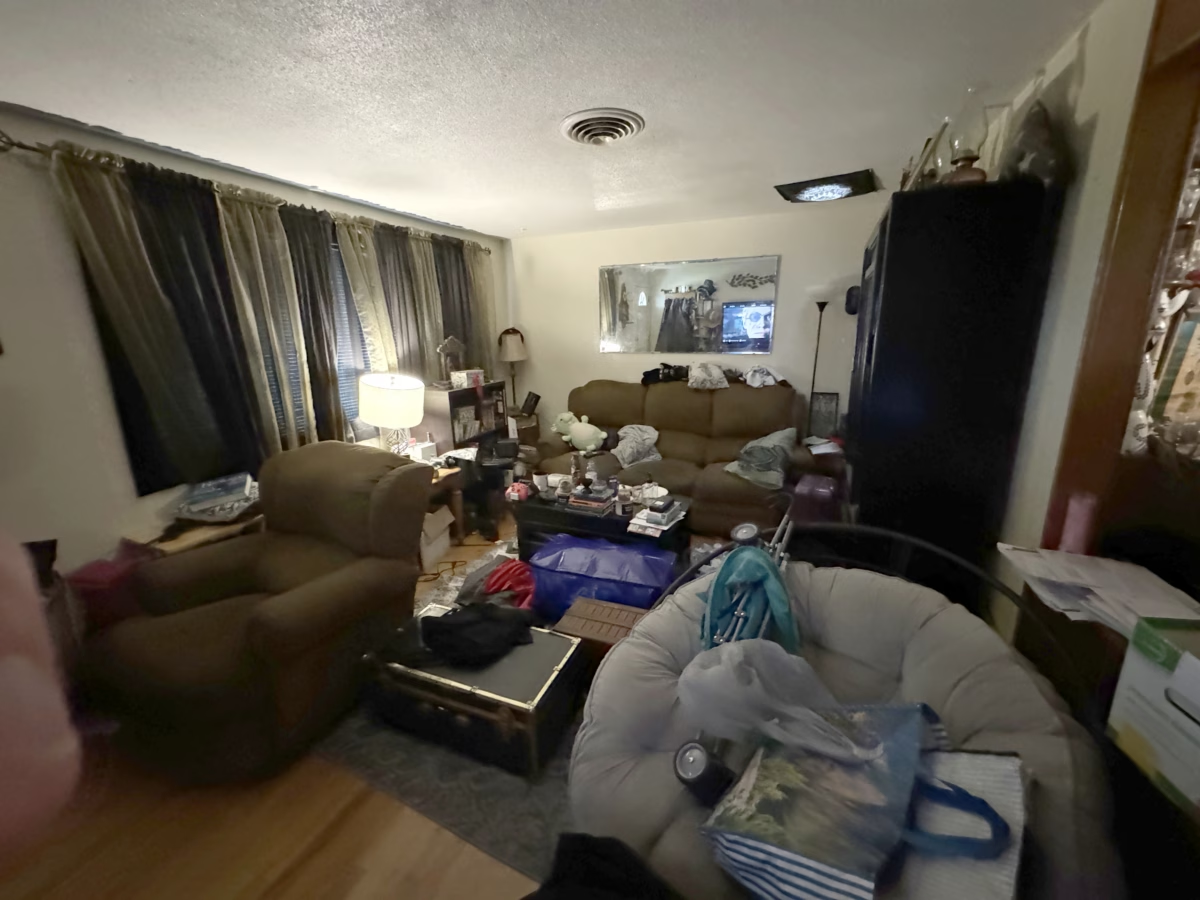
Inherited a Colorado Home With a Reverse Mortgage?


Inherited a Colorado home with a reverse mortgage? Organize loan notices, confirm deadlines, and coordinate the property’s sale options with your advisers.

Colorado Estate Services helps executors, personal representatives, and families manage and sell inherited properties throughout Colorado.
Inherited a Colorado home with a reverse mortgage? Organize loan notices, confirm deadlines, and coordinate the property’s sale options with your advisers.
One of the most common misconceptions about probate is that having a will means an estate can avoid the probate process entirely.
In Colorado, having a will does not automatically mean you can avoid probate.
A will provides instructions for how someone wants their property distributed after death and may name the person they want to serve as Personal Representative. But depending on how assets are owned and transferred, the estate may still need to go through probate before those instructions can be carried out.
A will can identify beneficiaries, specify who should receive certain property and nominate a Personal Representative to administer the estate.
When probate is necessary, the will becomes an important part of that process. For an informal probate with a will, Colorado requires the original will to be provided to the court. Once the appropriate documents have been accepted, the Personal Representative can receive Letters Testamentary establishing their authority to act on behalf of the estate. Colorado Judicial Branch
Whether probate is required depends more on what the deceased person owned and how those assets were titled than simply whether they had a will.
Some assets can transfer outside probate. Examples can include property held in certain trusts, accounts with valid beneficiary designations and property owned in a manner that provides for transfer to another owner at death.
Colorado also provides a small-estate procedure for qualifying estates involving personal property. However, the Colorado Judicial Branch notes that this procedure is available only when the estate meets the applicable requirements and no real estate needs to be transferred through the estate. Colorado Judicial Branch
That means real estate is often one of the biggest reasons families need to determine whether probate is necessary.
Once a Personal Representative has been properly appointed, they receive documentation establishing their authority to administer the estate.
From there, the property may need to be secured, maintained, valued, cleaned out, repaired or eventually sold.
This is also where an estate can quickly become more complicated. A vacant property may still have utilities, insurance, landscaping, personal property, maintenance and other issues that need attention while probate moves forward.
A properly established and funded trust can allow assets owned by the trust to pass outside the probate estate. However, simply having trust documents does not necessarily mean every asset was actually transferred into the trust.
Real estate ownership should be reviewed carefully to determine exactly how the property is titled.
If you’re unsure whether an estate needs to go through probate, an estate or probate attorney can review the will, ownership of the assets and the specific circumstances of the estate.
If real estate is involved, Colorado Estate Services can help with the property side of the process.
We work with Personal Representatives, families, fiduciaries and attorneys throughout the Denver area to coordinate everything from securing the property and removing personal belongings to repairs, valuations and ultimately the sale of the home.
Have a property involved in a Colorado estate? Contact Colorado Estate Services to discuss the property and what needs to happen next.
Inherited a House That Needs Work? Your Colorado Options
Selling a house in probate in Colorado usually starts with two questions: who can sign for the estate, and what should happen with the property while the estate is being administered? Families often ask whether they must wait until probate is completely finished before selling.
In many cases, the answer is no.
A home can often be prepared, listed, put under contract, and sold while the probate case is still open. What matters is whether the person handling the estate has the legal authority to sell the property.
From the property side, start by reviewing the home’s condition, ongoing costs, and sale options before committing to repairs or accepting an offer. This guide covers sale timing, preparation, family coordination, and a practical checklist.
Ask Dave about your estate property or jump to the sale checklist.
Before signing a listing agreement or purchase contract for the estate, confirm who has authority to act and what documentation or approvals are needed. Work with the estate’s probate attorney and title company to review the appointment and any restrictions that apply to the property sale.
The Colorado Judicial Branch explains that court-issued Letters are evidence of a personal representative’s appointment and authority to act for the estate. Its probate instructions provide more information about that documentation.
Preparing the property and planning a sale are different from having authority to sign for the estate. We can help evaluate the home and sale options while you work with the appropriate professionals to confirm the next steps.
The cost of holding the property is one factor to consider when comparing sale timelines.
A vacant property continues to cost the estate money. There may be:
There is also the risk that a vacant home develops a problem that goes unnoticed.
A frozen pipe, roof leak, failed furnace, or break-in can quickly turn into a much larger issue.
Completing a sale ends many of the home’s ongoing carrying costs. Compare those costs with preparation expenses and the estate’s goals when deciding on a plan.
It converts the home into cash that can eventually be distributed according to the estate.
This is where families sometimes get stuck.
The property may need to be cleaned out, painted, repaired, landscaped, or updated before it makes sense to put it on the market. At the same time, the estate may not have much cash available to pay for everything.
Before spending money, we generally recommend looking at multiple sale scenarios.
For example:
Option 1: Sell the property as-is
Determine what the home is realistically worth in its current condition and what the estate would likely net from a sale.
Option 2: Make targeted improvements and list the property
Identify improvements that are likely to produce a worthwhile return, estimate the cost, and compare the expected net proceeds.
The goal isn’t to make an inherited home perfect. It’s to determine which path makes the most financial sense for the estate.
For a closer look at the tradeoffs, read what to do when you inherit a house that needs work, including options when the estate has little cash available.
At 351 Nome Street in Aurora, a family handling probate administration from Illinois needed local help with a home full of personal belongings. We coordinated winterization, a new roof, carpet cleaning, and a deep clean, including contractor access and bids for the family to review.
Preparation took approximately two months and cost approximately $20,000. The home was then listed at $450,000, went under contract in two days, and sold for $465,000. Two days to contract did not include the preparation period or the time between contract and closing.
The useful lesson is to build a timeline for the whole project: property access and decisions, preparation, marketing, and closing. Each home and estate will have its own costs and timing. See before-and-after photos and more Colorado estate property examples.
Multiple heirs can make the situation feel more complicated, especially when everyone has a different opinion about what should happen with the house.
One heir may want to sell immediately. Another may want to renovate it. Someone else may want to keep it.
The Personal Representative has fiduciary responsibilities to the estate and should make decisions based on the estate’s interests and their legal authority, rather than simply choosing whichever option one family member prefers.
When disagreements arise, the estate’s probate attorney should provide guidance about the Personal Representative’s authority and obligations.
From the real estate side, providing clear numbers can make those conversations much easier. Instead of debating opinions, the family can compare realistic sale prices, improvement costs, timelines, carrying costs, and estimated proceeds.
See how Colorado Estate Services coordinates an inherited-home sale. If you live elsewhere, we also provide local help for out-of-state families.
One mistake we see is focusing immediately on, “What can we list the house for?”
There are usually more important questions first.
What condition is the property in? Is it insured correctly? Is anyone living there? Does it need to be secured? What needs to be removed? Are there repairs that should be completed? What would it sell for today? Would spending money improve the estate’s net proceeds enough to justify the additional time and expense?
Once those questions are answered, determining the right sale strategy becomes much easier.
Every estate is different, and the Personal Representative should work with their probate attorney to confirm their authority before selling estate property.
Once that authority is established, however, the real estate side of the process doesn’t necessarily need to wait until probate is finished.
At Colorado Estate Services, we help Personal Representatives and their attorneys manage the property from the initial walkthrough through closing. That can include property valuation, securing the home, cleanouts, repairs, vendor coordination, preparing the property for market, and ultimately selling it.
If you’re handling an estate with a property in Colorado and aren’t sure what the next step should be, we’re happy to walk through the home and provide options before you make any decisions.
You do not need to have the cleanout or repair plan figured out before contacting us. Share the property address, what you know about its condition and occupancy, whether you are local or out of state, and your preferred timeline. We can discuss a walkthrough, compare sale approaches, and identify the property work that needs attention.
Dave Quale and Matt Cobb help families and personal representatives throughout the Denver metro, including Arvada, Lakewood, Aurora, and Centennial. We coordinate the real estate work with you and the appropriate professionals, from the first property visit through closing.
Probate cases involving real estate often introduce an additional layer of complexity—vacant properties, emotional heirs, legal timelines, and financial risk. For probate attorneys in Colorado, managing these moving parts can quickly become time-consuming and expose both the estate and the attorney to unnecessary liability.
This is where partnering with a realtor who understands probate becomes a strategic advantage rather than just a convenience.
Real estate is often one of the most significant assets in an estate, and its valuation plays a critical role in probate.
A probate-experienced realtor can provide:
This helps ensure that valuations are not only accurate but also defensible if questioned by heirs or the court.
Vacant homes present real risks—vandalism, deferred maintenance, insurance gaps, and liability exposure.
A knowledgeable realtor can:
This level of oversight helps protect the estate while reducing the burden on the attorney and personal representative.
Many probate properties are not market-ready. They may involve years of deferred maintenance, personal belongings, or even hoarding situations.
A realtor can manage:
This allows attorneys to stay focused on legal responsibilities while ensuring the property is handled efficiently.
Selling a home during probate is not the same as a traditional transaction. There may be:
A realtor experienced in probate understands these nuances and helps ensure the transaction remains compliant from listing to closing.
Real estate decisions can quickly become emotional—especially when multiple heirs are involved.
A skilled realtor can serve as a neutral third party by:
This often leads to smoother collaboration and fewer disputes that could otherwise delay the case.
Delays in selling estate property can extend the probate process and increase holding costs.
A probate-focused realtor brings:
This helps move the transaction forward efficiently, supporting faster estate resolution.
Ultimately, the attorney’s role is not just legal—it’s also about guiding clients through a difficult process.
When a realtor is proactive, communicative, and knowledgeable about probate, it reflects positively on the attorney. Clients experience a smoother process, clearer communication, and better overall outcomes.
For probate attorneys, having a trusted real estate partner is more than a referral—it’s an extension of your team. The right partnership with Colorado Estate Services reduces risk, improves efficiency, and enhances the level of service you can provide to your clients.
Losing a parent is one of life’s most difficult experiences. Along with the emotional weight, many families are left wondering what to do with their loved one’s home. It can feel overwhelming to balance grief with practical responsibilities—but having a clear plan can make this process more manageable.
If you’re facing this situation in Colorado, you’re not alone. Here’s how to move forward step by step.
Before making any major decisions, it’s important to understand how probate impacts the home.
In Colorado, most properties must go through probate before they can be sold or transferred to heirs. This process ensures that debts are resolved and ownership is legally passed on.
If a personal representative (executor) has been appointed, they are responsible for managing the property during this time. Acting too quickly—such as attempting to sell the home before proper authority—is a common mistake that can create legal complications.
One of the most important early steps is protecting the property.
This includes:
A vacant home can deteriorate quickly or attract unwanted attention. Taking simple steps early helps preserve both value and peace of mind.
It’s completely normal to feel pressure to “figure everything out” right away—but in most cases, you don’t need to rush.
Give yourself and your family time to process what has happened before deciding whether to keep or sell the home. Emotional decisions made too quickly can sometimes lead to regret.
This is often the most difficult and personal decision.
Some key factors to consider include:
In some cases, one heir may wish to keep the home and buy out the others. In others, selling and dividing proceeds may be the simplest and most equitable solution.
When multiple heirs are involved, communication becomes critical.
Misunderstandings often arise when expectations aren’t clearly discussed early on. Having open, honest conversations about goals, timelines, and concerns can prevent conflict later.
If disagreements arise, bringing in a neutral third party—such as a real estate professional experienced in probate—can help ground decisions in facts rather than emotions.
Keeping a home is not just an emotional decision—it’s a financial one.
Ongoing costs may include:
These expenses are typically paid by the estate, but they can reduce what heirs ultimately receive. Understanding this early helps guide better decisions.
Whether you decide to keep or sell, the home may need some level of preparation.
This could involve:
Every situation is different. Some homes benefit from light updates, while others are best sold in their current condition.
If selling is the right path, you have more flexibility than you might think.
Options can include:
Working with a professional who understands probate sales in Colorado can help you navigate these choices while staying compliant with legal requirements.
Navigating what to do with a parent’s home can feel overwhelming, but you don’t have to go through it alone. With the right information, support, and a step-by-step approach, you can make thoughtful decisions that honor your loved one while protecting your family’s best interests.
Contact Colorado Estate Services today with any questions you may related to this stressful process.
Losing a loved one is overwhelming, and handling their home can feel like an added burden during an already difficult time. In Colorado, there are important steps that should be taken immediately after a death to protect estate property and avoid costly issues later in the probate process.
Understanding what to do early can help preserve the home’s value, prevent legal complications, and give you peace of mind.
One of the first priorities is making sure the home is safe. Change the locks if necessary, especially if multiple people had access. Remove spare keys and secure garages, sheds, and other entry points.
Vacant homes are more vulnerable to break-ins and vandalism, so taking this step early is critical.
Many homeowners don’t realize that a standard policy may not fully cover a vacant property. Contact the insurance provider right away to inform them of the death and vacancy status.
You may need a vacancy endorsement or a new policy to ensure proper coverage.
It can be tempting to shut everything off, but maintaining basic utilities is essential. Keep electricity, water, and gas running to prevent issues like mold, frozen pipes, or deterioration.
Regular maintenance such as lawn care or snow removal also helps avoid city violations and keeps the property presentable.
Forwarding mail ensures you don’t miss important notices such as mortgage statements, tax bills, or insurance documents.
Staying on top of these obligations helps prevent penalties, lapses in coverage, or legal complications during probate.
Take photos or videos of the home and its contents as soon as possible. This documentation can be helpful for insurance purposes, estate accounting, and avoiding disputes among heirs.
Only allow access to those directly involved in the estate. This reduces the risk of missing items, misunderstandings, or liability issues.
Every estate is different, and Colorado probate laws can impact what you can and cannot do with the property. Working with professionals ensures you stay compliant while making informed decisions.
Taking these steps early can prevent unnecessary stress, protect the estate’s value, and make the probate process smoother for everyone involved. If you’re unsure where to start, guidance from experienced professionals can make all the difference.
Contact Colorado Estate Services today to for assistance on protecting one of the estates largest assets.
When a loved one begins to age or faces a serious health diagnosis, one of the most important legal decisions a family can make is establishing a Medical Durable Power of Attorney (MDPOA). This vital document allows someone to legally make healthcare decisions on anothers behalf if they become unable to speak for themselves.
But even with paperwork in place, navigating real-life medical crises and end-of-life care decisions can be overwhelming. That’s where professionals like Debra Kooser at NorthStar Elder Solutions step in, not just to help with documents, but to guide families with compassion, clarity, and years of hands-on experience.
What Is a Medical Durable Power of Attorney?
A Medical Durable Power of Attorney gives a trusted individual the legal authority to make medical decisions for someone else (the principal) when that person is incapacitated or unable to communicate. This can include decisions about treatments, procedures, nursing care, hospice, and even life support. It is durable because it remains in effect even after the principal loses capacity.
Unlike a living will, which outlines preferences but doesn’t assign a decision-maker, an MDPOA ensures there’s a real person, often a family member or professional advocate, ready and able to step in when critical healthcare choices arise.
How Debra at NorthStar Elder Solutions Supports Families
Debra, the founder of NorthStar Elder Solutions, has served as a Medical Durable Power of Attorney for multiple clients and brings deep experience in navigating the complex realities of elder care.
Whether she appointed as an MDPOA or working behind the scenes to support someone who has been, Debra role often includes:
Debra’s approach is grounded in years of experience working with aging individuals and their loved ones, and her clients consistently describe her as steady, reliable, and deeply compassionate. For families facing overwhelming choices, she becomes a guide, advocate, and trusted presence.
When to Reach Out
If you’re caring for an aging parent, helping a loved one plan ahead, or managing a complex medical or estate situation, having an experienced MDPOA or someone who can coach you through the process is invaluable.
Debra Levy at NorthStar Elder Solutions is an exceptional resource for:
A Trusted Partner in Difficult Times
At Colorado Estate Services, we often see how interconnected legal, medical, and real estate decisions become when a family member ages, falls ill, or passes away. We’re proud to work alongside partners like Debra who understand the human side of this process and who step in with integrity when families need help the most.
You can learn more about Debra’s services at www.northstareldersolutions.com
And as always, if you or your clients need help with estate-related real estate, we’re here to guide the process every step of the way.
We live in a hyper-connected digital world and it’s no secret that our information is bought and sold by scammers, no matter how cautious we are. The good news is, understanding and preparing for these scams can help you protect yourself and loved ones even if the scammer has some of your information already.
Scams that target the elderly and families in the estate settlement process continue to soar: according to the FBI’s Internet Crime Complaint Center (IC3), Americans aged 60 and older lost more than $3.4 billion to fraud in 2023 alone, with this trend continuing upward in 2025.
We’ve identified the top five scams targeting older adults and families in the estate settlement process this year and have practical steps you or your loved ones can take to stay safe.
The best preventative measure is always consistent communication with trusted family members or friends. If you’re ever unsure that you might be target for a scam, talk to someone so they can help.
Last Thoughts
1. Communicate and Collaborate with Family Members: Document your debts, assets, and other general information using a platform like One Step After to track which creditors, government agencies, or other communication might be valid.
2. Talk Regularly: Maintain open lines of communication with family and friends. Isolation increases vulnerability.
3. Report Suspicious Activity: File reports with the FTC, local police, and IC3.gov if you suspect a scam.
4. Don’t answer the phone for unknown numbers: Let unknown phone numbers go to voicemail and suspicious texts. You can verify the caller and call them back if the call was real.
5. Designate a Financial Advocate: Choose a trusted person to help manage or review financial transactions.
About the author: Chris is the Founder of One Step After, an online estate organization software for seniors planning their estate and for families navigating the after-loss process. One Step After empowers families to collaborate on estate details to make estate organization easy and cost effective.
If you have any additional questions please contact us at Colorado Estate Services.
When it’s time to sell an estate property, the question of whether to update or renovate often comes up early in the conversation. The good news? A full remodel is rarely necessary. In many cases, small, thoughtful improvements can help the home sell faster and for a higher price without overextending the estate’s time, budget, or resources.
Whether you’re a personal representative, attorney, or family member navigating the process, focusing on simple, cost-conscious upgrades can deliver excellent returns and reduce friction during the sale.
Here are five smart improvements that offer strong value without requiring a major investment.
Painting is one of the most affordable and high-impact updates you can make. A fresh coat of neutral-colored paint helps a home look brighter, cleaner, and more inviting. Stick with light gray, beige, or soft white to appeal to a wide buyer pool.
Exterior paint, especially on doors, trim, and shutters, can dramatically improve curb appeal. It also helps online listing photos stand out, encouraging more showings and stronger first impressions.
Outdated lighting can make a home feel dark or dated, even if the rest of the property is well-maintained. Replacing older fixtures with clean, modern alternatives helps rooms feel brighter and more contemporary.
LED bulbs and simple lighting upgrades are inexpensive and easy to install. They instantly signal that the home has been cared for, and they can improve overall presentation with minimal effort.
Most buyers form an impression of a home before they even walk through the front door. That’s why minor landscaping updates and exterior clean-up are essential.
Key areas to focus on include:
These updates help the home appear well-maintained and move-in ready, qualities that buyers prioritize.
You don’t have to gut the kitchen or install all-new cabinetry to make a meaningful impact. Instead, focus on targeted updates that modernize the space and enhance appeal:
These small changes can make a dated kitchen or bathroom feel significantly more updated and livable often for under $1,000.
Worn flooring is one of the first things buyers notice—and it can be a deal-breaker. Fortunately, full replacement isn’t always necessary. Options include:
Even partial upgrades can dramatically improve a home’s visual appeal and help eliminate buyer objections.
Every dollar spent preparing an estate property should ideally yield a multiple of that amount in increased sale value or reduced time on market. Strategic updates help ensure the home appeals to more buyers, appraises well, and sells with less negotiation and fewer delays. For more insight on improvements that add value, This Old House shares tips on top home upgrades by return on investment.
At Colorado Estate Services, we walk properties with our clients to identify the most impactful improvements and connect you with trusted vendors who can execute the work quickly and affordably.
If you’re unsure which updates make sense for a particular home, contact us for a free consultation and customized recommendations.
Losing a loved one is never easy. While you are grieving, there are also many practical steps that need to be taken, often sooner than you expect. If you are feeling overwhelmed or unsure of where to start, this guide will help you understand what to do in the first hours, days, and weeks following a death.
Immediate Tasks
In the very beginning, focus on the most time-sensitive matters:
Planning the Memorial
Honoring your loved one’s life may include:
Next Steps to Handle Early
Once immediate tasks are handled:
Securing Vacant Property
If the deceased lived alone or the home will be unoccupied:
Managing Financial Matters
Begin by contacting:
You Do Not Have to Do This Alone
This list is just the beginning. Every estate is different, and unexpected details may come up. If you are looking for help connecting with reliable professionals such as probate attorneys, estate sale companies, or financial advisors, or if you want one on one support, consider reaching out to us at Colorado Estate Services or Kylee at After Loss Advisors.
No one should have to navigate this time alone. We are here to help you move forward with compassion, clarity, and trusted resources.
You can click below to download a printable version of this checklist and keep it on hand as you take the next steps.
Loading Viewer…
Inherited homes and long-vacant properties often come with small, overlooked repair issues. At first glance, these may seem minor or purely cosmetic. But for personal representatives, attorneys, and fiduciaries managing an estate, these small problems can lead to serious financial consequences if left unaddressed.
At Colorado Estate Services, we help families and estate professionals avoid costly surprises by identifying and managing deferred maintenance early, before it impacts the home’s value, marketability, or safety.
It’s common to assume that an older or unused property is fine for now, especially when no one is living in it. But time, weather, and neglect often cause small issues to escalate into expensive, disruptive repairs. Below are several real-world examples of how deferred maintenance can quietly drain equity from an estate:
Deferred maintenance doesn’t just affect a home’s physical condition, it directly impacts its market appeal and final sale price. A home that appears neglected:
Even simple updates like fresh paint, deep cleaning, basic landscaping can increase perceived value by 10% or more. But if core maintenance issues are ignored, cosmetic upgrades won’t be enough to reassure today’s buyers.
For estate representatives, staying ahead of basic maintenance is one of the most effective ways to protect the value of the property and ensure a smoother sales process.
You don’t need to tackle everything at once or alone. At Colorado Estate Services, we regularly assist families and fiduciaries with:
Whether you’re listing a home in its current condition or preparing it for retail buyers, we’re here to help you reduce risk, avoid delays, and preserve the estate’s equity.
Contact Colorado Estate Services today to schedule a free consultation or learn more about how we can help.
For many families, the home left behind by a loved one is more than just real estate, it’s a place filled with memories, meaning, and emotional ties. Deciding whether to keep or sell the property can be one of the most emotionally charged parts of the probate process, especially when multiple heirs are involved.
At Colorado Estate Services, we’ve guided hundreds of families through this sensitive transition. Below are practical tips for approaching the conversation with empathy, clarity, and shared purpose.
Before diving into financials or logistics, it’s important to recognize that emotions will naturally play a role in the decision. The home may represent:
Starting the discussion by acknowledging these emotions helps set a respectful tone. Let family members know that their feelings are valid, and that the goal is to make a thoughtful, compassionate decision together.
In Colorado, the Personal Representative (PR) is the individual legally responsible for managing the estate, including decisions related to real estate. While the PR has the final authority, maintaining open communication with siblings and other heirs can prevent misunderstandings and conflict.
Set clear expectations from the beginning:
Even when there’s legal clarity, emotional transparency can go a long way in preserving family relationships.
For more details about a Personal Representative’s legal responsibilities, the American Bar Association offers a helpful overview.
Before any decisions are made, it’s helpful to collect facts that can ground the conversation in reality:
At Colorado Estate Services, we offer free property assessments and date-of-death appraisals to help families make decisions based on current market data, not assumptions.
Once everyone has access to the same information, ask key questions to understand individual perspectives:
In many cases, families start with the intention to keep the home, but realize that selling it may better serve everyone involved. A neutral third party, such as a real estate professional experienced in probate, can help mediate these conversations objectively.
Reframing the conversation around shared goals can reduce tension and build unity. Instead of focusing on individual preferences, ask:
Common goals such as maximizing value, preserving family harmony, and honoring the memory of the deceased can guide families toward a fair and peaceful resolution.
Selling or keeping a family home is rarely just a financial decision, it’s a deeply personal one. That’s why we offer more than just listing services. At Colorado Estate Services, we provide:
If your family is facing uncertainty about what to do next, we’re here to help you move forward with confidence, compassion, and clarity.
Contact Colorado Estate Services today for a no-obligation consultation.
A home that looks perfectly fine on the surface can hide serious issues that lead to expensive repairs down the line. For attorneys managing estate or trust properties, catching early signs of deterioration is critical for preserving a home’s value and ensuring a smoother sale or transfer.
Here are the most common early warning signs to watch for and what they might mean:
These are often the first red flags for hidden leaks. Whether it’s a minor roof leak, a burst pipe, or a slow plumbing drip, moisture intrusion is one of the most damaging and costly issues a property can face. If left untreated, it can lead to mold growth, wood rot, and compromised structural integrity. Always inspect ceilings, around windows, and under sinks.
A persistent musty odor or noticeable dampness is often a sign of poor ventilation or hidden water problems. Basements and crawlspaces are particularly vulnerable, especially in older homes. Check for condensation on pipes or walls, warped wood, or damp carpeting all of which can signal a moisture problem that needs attention.
Uninvited guests like rodents, termites, or carpenter ants can quietly wreak havoc. Look for droppings, gnawed materials, or hollow-sounding wood. Chewed electrical wires can also create fire hazards. Catching an infestation early is key to avoiding serious structural damage and high extermination costs.
Some minor settling is normal over time, but larger or expanding cracks can point to serious foundation or structural issues. Pay attention to cracks wider than 1/8 inch, especially if they’re accompanied by sloping floors, sticking doors, or gaps around windows.
If a vacant or lightly used property suddenly has a jump in water or electricity usage, it could be a sign of trouble. Leaking toilets, damaged irrigation systems, or failing HVAC equipment are common culprits. Monitoring utility bills from companies such as Denver Water can offer a simple early warning system.
Flaking paint, clogged gutters, missing shingles, or overgrown landscaping might seem cosmetic, but they can also expose the property to moisture damage or pest entry points. Routine exterior upkeep helps preserve curb appeal and structural protection.
Small problems can quickly snowball into major repairs when homes are left unmonitored. Regular inspections, especially in inherited or vacant properties, are essential for protecting the asset. Partnering with a real estate team that specializes in estate and probate properties ensures issues are caught early and handled efficiently.
Have questions or need help evaluating a property? Feel free to reach out to Colorado Estate Services, we’re here to assist.
At Colorado Estate Services, we recently had the privilege of meeting, Kimberly Rosene, a Hospice Specialist, at AdventHealth Porter Hospice. Kimberly’s dedication to supporting families during end-of-life transitions is truly inspiring. She shared invaluable information about local resources available to assist families with funeral and burial expenses.
AdventHealth Porter Hospice, located in Denver, offers compassionate, whole-person care to patients and their families. Their team provides not only medical support but also emotional and spiritual guidance, ensuring that each individual’s journey is met with dignity and respect. Kimberly and her colleagues work tirelessly to connect families with the resources they need during these challenging times.
One critical aspect Kimberly highlighted is the availability of county-level assistance programs designed to help low-income families cover funeral and burial costs. Here’s an overview of the resources available in the five-county Denver metro area:
Denver County
Arapahoe County
Jefferson County
Adams County
Douglas County
For veterans, the U.S. Department of Veterans Affairs offers burial allowances and other benefits. More information can be found at VA Burial Benefits.
For more information on AdventHealth Porter Hospice and the compassionate care they provide, please visit their official website or reach out to Kimberly at (303) 694-3545.
If you or someone you know needs assistance navigating these resources, please don’t hesitate to reach out to us at Colorado Estate Services. We’re here to support you every step of the way.
If you’ve inherited a property in Colorado, you may be surprised to learn that selling it could trigger capital gains tax. Fortunately, the IRS offers favorable treatment for inherited real estate that can significantly reduce, or even eliminate your tax liability if you have the right documentation.
At Colorado Estate Services, we guide families through the process of preparing and selling inherited homes, and we work with trusted professionals to help you make smart financial decisions.
Capital gains tax is a tax on the profit you make when selling a capital asset, such as a home. For most real estate, the gain is calculated by subtracting the original purchase price from the sale price.
Standard formula:
Sale Price – Purchase Price = Capital Gain
But for inherited homes, the IRS applies a different and more beneficial calculation.
When you inherit a home, you’re not taxed based on the original owners purchase price. Instead, you receive a step-up in basis, which adjusts the property’s value to its fair market value (FMV) on the date of the decedents death. For additional guidance, the IRS explains how basis is calculated for inherited property in Topic No. 703.
Example:
Your taxable gain is only $5,000, not $380,000, because of the step-up in basis.
This benefit can greatly reduce or eliminate capital gains tax, but it requires proper documentation.
To use the step-up in basis, the IRS may require proof of the property’s fair market value on the date of death. That’s where a date-of-death appraisal comes in.
At Colorado Estate Services, we offer a complimentary date-of-death appraisal (up to $650) for families who choose to list their inherited home with us. This independent valuation can:
A formal appraisal creates a clear, defensible record of the home’s value, whether you sell the home now or years later.
Even if you’re not planning to sell the home right away, it’s important to get a date-of-death appraisal as soon as possible. Property values may rise or fall over time, but the IRS will still expect documentation of the home’s value at the time of death.
Without an appraisal:
At Colorado Estate Services, we help families navigate the sale of inherited property with clarity and care. Our team can coordinate the valuation, prep, and sale of the home, whether you’re local or managing the estate from out of state.
We’re not tax advisors, but we work closely with experienced CPAs and probate attorneys who can provide legal and financial guidance. We’ll also provide the tools you need, including a complimentary date-of-death appraisal, to make smart and informed decisions.
If you’ve inherited a home and are unsure how capital gains tax may apply, contact Colorado Estate Services. We’ll help you move forward with confidence.
If you’re managing an estate in Colorado, you’re likely juggling a long list of responsibilities and facing some unfamiliar territory. One of the biggest questions we hear is: Do I call a probate attorney first, or a real estate agent?
The answer depends on where you are in the process, but knowing the difference between the two roles can save you time, money, and unnecessary stress.
At Colorado Estate Services, we work closely with both families and attorneys to keep the real estate side of probate smooth, respectful, and efficient. Here’s a breakdown to help you know who to call, and when.
Your first step after a loved one passes, especially when real estate or other significant assets are involved, is to consult a probate attorney. Their role is to guide you through the legal process of settling the estate.
A probate attorney can help you with:
Even with a ‘simple estate’, an attorney can help avoid costly delays or legal issues.
You can also find helpful resources and probate forms directly on the Colorado Judicial Branch’s probate page.
Note: Colorado Estate Services does not provide legal advice, but we’re happy to refer trusted probate attorneys we work with regularly.
Once a Personal Representative has been officially appointed and there’s real property to sell, it’s time to bring in a probate-savvy real estate agent.
At Colorado Estate Services, we specialize in guiding estate sales from start to finish, and we can assist with:
While a real estate agent can’t give legal advice, they can make the sale process smoother, more profitable, and less overwhelming.
The best outcomes happen when attorneys and agents collaborate effectively. At CES, we frequently work alongside probate attorneys to ensure the estates real property is handled with care, professionalism, and attention to timelines.
Together, we help clients:
We respect legal boundaries, communicate proactively, and help Personal Representatives feel confident and supported.
Whether you’re in the early stages of probate or ready to prepare the property for sale, we’re here to guide you.
Contact Colorado Estate Services for a free consultation. We’ll help you connect with the right professionals and walk you through what comes next.
One of the most emotionally and logistically difficult parts of settling an estate is cleaning out the property. Whether the home has been well-kept or left neglected, the process of sorting through a loved one’s belongings can be deeply overwhelming for heirs, especially when grief, time constraints, or family dynamics are involved.
For fiduciaries and estate attorneys, offering guidance on how to approach the cleanout process can help clients avoid delays, reduce conflict, and ultimately get the property ready for market more efficiently.
Here’s a step-by-step approach to simplify the process:
Before diving in, walk through the property to get a full picture of what’s inside. Take note of any personal property, financial or legal documents, heirlooms, or items with sentimental value. Snapping photos of rooms or items can help with inventorying, sharing with heirs, or consulting with appraisers later. If the property is cluttered or unsafe, consider doing this walkthrough with a trusted professional or contractor.
Creating structure helps cut through the emotional weight of decision-making. A four-category system works well:
Encourage family members to participate early, ideally in person or via video, to avoid confusion or disputes. If conflicts arise, consider bringing in a neutral third party such as a professional organizer or mediator.
Time is often limited, especially when the property needs to be listed or returned to a trust. Hiring experienced help can speed things up and reduce stress.
These services are especially helpful when heirs are out of state or the home has been sitting for a long time.
For fiduciaries and personal representatives, record-keeping is key. Maintain a log of valuable items distributed, items sold, and anything donated, along with receipts and photos where possible. This transparency protects everyone involved and can make estate accounting far smoother.
Once the home is cleared, don’t stop there. A professional deep cleaning makes a big difference in how a home shows to buyers. Consider touch-up paint, minor repairs, or staging if appropriate. A clean, empty home helps buyers visualize potential, and allows for a faster, more confident sale.
A cluttered or neglected home can feel overwhelming, but with the right plan and partners, the cleanout process doesn’t have to be. For attorneys and families alike, simplifying this step not only eases stress but also preserves property value.
If you or your client is feeling stuck or unsure where to start, we’re happy to step in. We can manage the entire cleanout process from start to finish, so they don’t have to go it alone. Reach out to us anytime.
One of the most common questions we get at Colorado Estate Services is: “Should I fix up the home before selling, or just sell it as-is?” If you’ve inherited a property or are managing the sale of an estate, this is a key decision that can impact both your time and your bottom line.
Our answer? Don’t try to become a house flipper.
Why “Fix & Flip” Usually Doesn’t Work for Estates
TV shows and online videos make flipping a house look fast and easy. But real life tells a different story:
Unless you’re a licensed contractor or investor with deep experience, attempting a full renovation is rarely worth the risk.
Focus on Smart, Value-Boosting Fixes
Instead of a full remodel, we recommend focusing on cost-effective improvements that bring at least an equal or better return on investment. These are the “no regret” fixes that:
Top Fixes Worth Doing Before You Sell:
These upgrades are affordable, fast to complete, and help buyers see the home’s potential without overwhelming you.
When Selling As-Is Might Be the Best Option
There are times when selling the home completely as-is is the most sensible choice:
In these cases, we can connect you with trusted off-market buyers and investors who specialize in as-is properties. We also offer quick sale pricing options to help you weigh your choices.
We Help You Decide What Makes Sense
At Colorado Estate Services, we don’t push you toward one path or another. We look at your situation, the property’s condition, and your goals to help you make a decision that protects your time, sanity, and bottom line.
Whether that means selling it as-is or making a few smart upgrades to boost your price on the MLS, we’re here to help you through it step-by-step.
Contact Colorado Estate Services today for a free home assessment and let’s talk through the best strategy for your inherited or estate property.
Not every estate home is ‘HGTV-ready’ and that’s okay. While some homes show beautifully with staged furniture and modern updates, others are sold as-is, needing cleaning, repairs, or a full renovation. But even a dated or distressed property can be marketed effectively with the right strategy.
Smart marketing doesn’t hide a home’s flaws, it frames them honestly while focusing on strengths, potential, and the right buyer audience.
Here’s how we successfully position ‘less-than-perfect’ listings to attract strong offers:
Good photography matters, but not all photos need to be glossy or staged. Our approach is to highlight the home’s best features – natural light, original hardwood floors, spacious layouts, while maintaining full transparency about condition. We avoid gimmicks or overly edited images, instead capturing the space as-is with thoughtful angles and accurate lighting. This builds trust and helps weed out the wrong buyers early. Our go to photographer are either Virtuance or JustPendedDenver.
The written description is where we tell the property’s story. Instead of apologizing for imperfections, we emphasize opportunity.
We use language that appeals to both end-users looking for a project and investors seeking a value-add property, always tailoring the message to match the home’s true potential.
Sold ‘as-is’ doesn’t have to be a dealbreaker. In fact, it’s often a welcome signal for investors or buyers with renovation experience. What matters most is aligning the listing price and marketing with the home’s condition. When buyers know what to expect, they’re less likely to walk away after a showing or inspection. Clear disclosures, honest visuals, and proper pricing work together to keep interest high and surprises low.
In today’s tight inventory market, many buyers are looking for homes that need work. Flippers, landlords, and even first-time buyers willing to put in sweat equity all compete for these types of listings, especially when they’re in sought-after neighborhoods or have solid bones.
We market aggressively to this audience by:
When the message and target market align, ‘fixers’ can sell quickly and for strong prices.
Dated homes, estate cleanouts, or properties in rough condition don’t need to sit on the market or sell for bottom dollar. With a clear plan, transparent marketing, and an understanding of what buyers are looking for, even the most challenging homes can attract competitive offers.
If you’re managing a property that’s far from perfect, don’t worry, we’re here to help present it in the best possible light. Reach out to Colorado Estate Services anytime to discuss strategy, pricing, or to schedule a walk-through.