
How to Sell an Inherited House When the Estate Has No Cash

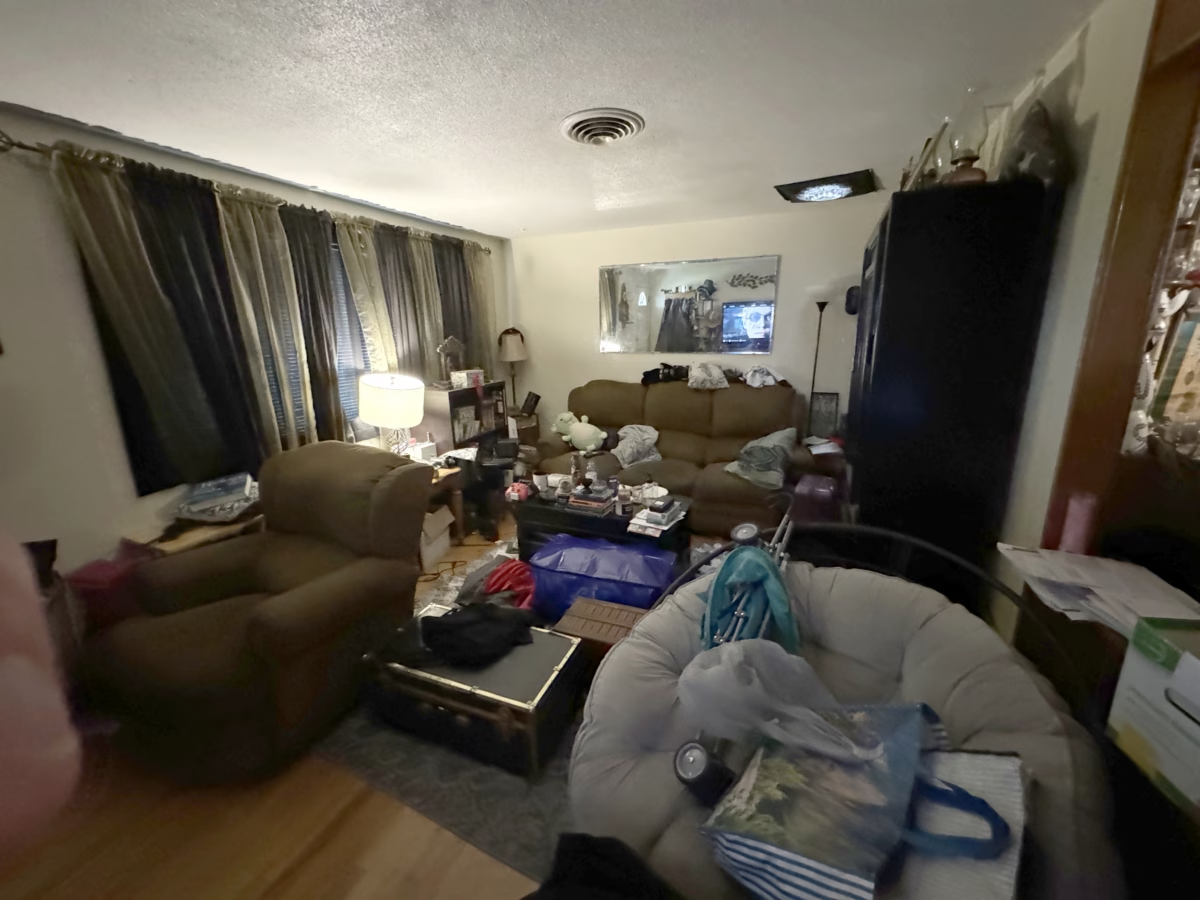
It’s a situation we see fairly often with inherited homes.
The estate owns a house worth hundreds of thousands of dollars, but there isn’t much cash available to prepare it for sale.
The home may be full of personal belongings. The carpet needs to be replaced. The walls need paint. The yard is overgrown. There may be plumbing, electrical, or other repairs that need attention.
The Personal Representative knows that doing some work could help the property sell, but the estate doesn’t have $10,000 or $20,000 sitting in a checking account to pay for everything.
So what do you do?
The first step is usually not figuring out how to pay for the repairs. It’s figuring out whether the repairs are worth doing at all.
Start With the Numbers
Before an estate spends money on a property, we like to establish a few numbers:
What is the home worth in its current condition?
What could it reasonably sell for after improvements?
How much would those improvements cost?
Those three numbers tell us a lot.
Suppose an inherited property could sell for approximately $450,000 as-is.
After $15,000 of targeted work, we believe it could sell for approximately $490,000.
That may be worth exploring.
But if spending $25,000 is only expected to increase the sale price by $20,000, there probably isn’t a good reason for the estate to take on the additional cost, risk, and time.
We’re interested in the estate’s net proceeds, not simply producing the highest possible sale price.
You Don’t Need to Renovate Every Inherited Home
There can be a temptation to walk through an older home and start making a list of everything that’s wrong with it.
Old cabinets. Dated bathrooms. Worn flooring. An aging driveway. Older windows. Landscaping that hasn’t been touched in years.
But selling a home isn’t the same as preparing it for another 20 years of ownership.
Some improvements have a strong return. Others don’t.
In many situations, relatively simple work such as cleaning, removing belongings, painting, addressing obvious deferred maintenance, improving landscaping, and replacing badly worn flooring can dramatically change how buyers perceive a property.
A full renovation may not be necessary.
What If the Estate Truly Doesn’t Have the Money?
There are still options.
One is simply selling the property in its current condition. There is nothing inherently wrong with an as-is sale if the numbers make sense.
Another possibility is coordinating certain property-related expenses so they can be reimbursed from the proceeds of the eventual sale rather than requiring the family to pay everything upfront.
At Colorado Estate Services, we can front up to $10,000 in approved property preparation costs in qualifying situations, with those costs reimbursed at closing.
That can include items such as clean outs, repairs, cleaning, landscaping, or other work needed to prepare the property for market.
The goal isn’t to convince an estate to spend money. It’s to prevent a lack of immediately available cash from forcing the estate into a bad decision.
Get Multiple Bids for Larger Projects
When work is necessary, Personal Representatives also need to be mindful that they’re managing someone else’s estate.
For larger projects, we generally obtain multiple quotes so the Personal Representative can compare pricing and make a documented decision.
This is particularly important when the difference between contractors can be thousands of dollars.
It also gives the Personal Representative and their attorney a clearer record of why a particular vendor or course of action was selected.
Sometimes the Best Decision Is to Do Almost Nothing
We’ve walked into plenty of properties where our recommendation was much simpler than the family expected.
Clean it out.
Deep clean it.
Take care of a few obvious issues.
Then sell it.
Every dollar spent preparing an inherited property should have a reason behind it.
If $5,000 of work is likely to generate significantly more than $5,000 for the estate, it deserves consideration.
If a $15,000 project is unlikely to change what a buyer will pay, we’d rather tell the Personal Representative to keep that money in the estate.
Creating a Plan Before Spending Money
The best time to evaluate an inherited property is before contractors start working.
At Colorado Estate Services, we help Personal Representatives compare different sale strategies, coordinate vendors, manage property preparation, and ultimately sell the home.
That may mean preparing the property for the traditional market. It may mean recommending a much smaller list of improvements. And sometimes it means determining that an as-is sale is the better financial decision.
If you’re managing an estate property and aren’t sure how much work it needs or how the estate will pay for it, we’re happy to walk through the property and help you build a plan.